
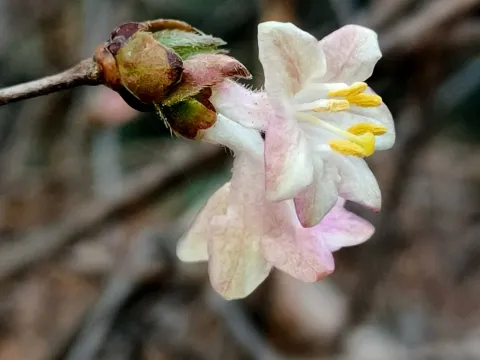
Lonicera elisae
Lonicera elisae
Lonicera elisae is a perennial deciduous shrub belonging to the Caprifoliaceae family. Known for its elegant structure and refined aesthetic, this species is highly valued in horticulture for its ornamental properties and relatively undemanding nature.
What the section contains
Lonicera elisae
Native to the mountainous regions of East Asia, this honeysuckle has adapted to various environmental conditions. It thrives best in well-drained, moderately fertile soil with a neutral or slightly acidic pH, which supports robust root development and long-term health.
For optimal performance, Lonicera elisae requires a position in full sun to partial shade. Exposure to direct sunlight is crucial for achieving the densest foliage and promoting healthy flower buds, although partial shade can prevent sun-scorch in hotter regions.
Climatic requirements involve moderate watering, especially during the establishment phase. The plant demonstrates high winter hardiness, making it suitable for temperate zones, provided that the soil is not prone to deep freezing while oversaturated with water.
Agrotechnical management includes regular mulching to retain moisture and suppress weed growth. Fertilizing with balanced nutrient formulas in early spring supports the shrub's transition from dormancy, ensuring vigorous growth throughout the season.
The primary threats to Lonicera elisae are fungal pathogens, particularly powdery mildew, which tends to proliferate in dense foliage with poor air circulation. Proper pruning is essential to allow adequate ventilation and light penetration into the center of the shrub.
Aphids and leaf rollers are common pests that feed on young, succulent shoots. Integrated pest management, involving both biological controls and targeted systemic insecticides, is recommended when infestations exceed economic or aesthetic thresholds.
Root rot represents a significant physiological threat, particularly in poorly drained soils or areas prone to waterlogging. Ensuring that the planting site has adequate slope or a deep drainage layer is a fundamental step in plant preservation.
Frost damage to emerging buds can be an issue in early spring. While the shrub is generally hardy, sudden temperature drops following a warm spell can harm tender growth, requiring the use of protective covers if such weather patterns occur.
Regular sanitation measures, including the prompt removal of dead or diseased wood, significantly reduce the incidence of secondary infections. Maintaining a clean cultivation area is key to preventing the lifecycle continuation of typical honeysuckle pests.