
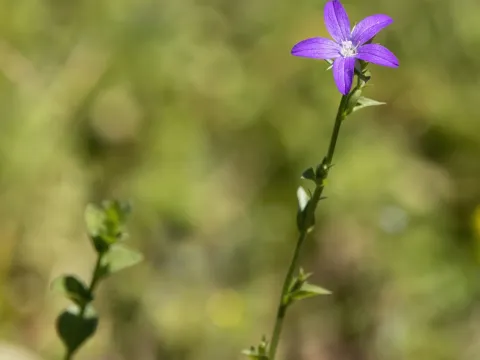
Triodanis
Triodanis
Triodanis is a genus of annual flowering plants within the family Campanulaceae, commonly known as Venus looking-glass. These plants are recognized for their distinct floral structure and their ability to thrive in varied environmental conditions.
What the section contains

Triodanis
Native to North America, these plants are typically found in meadows, prairies, and disturbed soils. Their natural distribution suggests high adaptability to different soil types, provided they are not excessively compacted or permanently waterlogged.
A key biological trait of the Triodanis genus is cleistogamy. The plants produce both open, showy flowers for cross-pollination and closed, self-pollinating flowers. This dual reproductive mechanism ensures seed production under virtually any environmental stress.
To cultivate Triodanis successfully, one should provide a sunny or partially shaded location. The soil should be well-drained and relatively light. While the plant is hardy, it performs best when protected from extreme competition from aggressive weeds.
The practical use of Triodanis is centered on ornamental gardening and native meadow restoration. It is favored by growers who prioritize low-maintenance plants that contribute to biodiversity and support local pollinator populations.
The primary threats to Triodanis populations involve fungal infections such as powdery mildew, which often occur when the plants are grown in overcrowded or poorly ventilated areas. High humidity is a critical risk factor for the health of these plants.
Pest pressures are generally low, but slugs and snails can be problematic during the germination phase. Monitoring for herbivorous insects that damage the leaf tissue is also recommended to ensure the plant reaches its full reproductive maturity.