
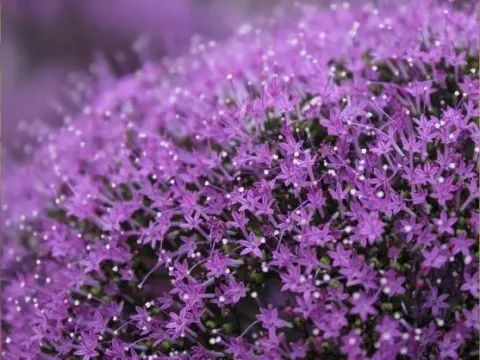
Trachelium
Trachelium Tourn.
Trachelium (Trachelium) belongs to the Campanulaceae family and is commonly grown as an annual or biennial plant in professional floriculture. The seeds are extremely fine, requiring surface sowing on a sterile, moist substrate without covering them with soil.
What the section contains

Trachelium
The optimal sowing time for nursery production is between January and February. Germination requires constant light and stable temperatures ranging from 20 to 22 degrees Celsius to ensure successful development.
Seedlings typically emerge within 2 to 3 weeks. During this phase, it is crucial to maintain high humidity by covering the trays with plastic or glass until the first true leaves appear, at which point the seedlings should be pricked into individual pots.
Transplanting to the final growing location in greenhouses or open fields is performed once the risk of spring frost has passed. Planting density is critical, usually maintained at 64 to 80 plants per square meter to ensure adequate airflow.
Trachelium is sensitive to day length; therefore, using artificial lighting in the early stages helps regulate the harvest schedule and ensures the uniform growth necessary for high-quality commercial cut flowers.
Trachelium thrives in well-drained, fertile soil with a neutral to slightly acidic pH level. Soil structure must allow for good aeration to prevent waterlogging, which is a common cause of failure for this species due to root sensitivity.
The plant is photophilic but requires shading during periods of intense heat to protect the delicate foliage and flower heads. Daytime temperatures between 15 and 20 degrees Celsius are considered ideal for vigorous development.
Irrigation management is essential, requiring a balance between keeping the soil moist and avoiding excessive moisture. Drip irrigation is highly recommended to provide uniform water delivery directly to the root zone without wetting the foliage.
Fertilization should focus on potassium-rich nutrients during the budding stage to enhance flower head size and stem strength. Organic amendments are beneficial during the initial vegetative phase to promote robust plant architecture.
Proper ventilation is a key requirement for indoor cultivation to manage humidity levels. Excessive humidity often leads to fungal outbreaks, making efficient greenhouse climate control a necessity for successful production.
Trachelium is a highly valued cut flower in the professional floral market, known for its longevity and decorative corymb-shaped clusters. Economic returns are maximized through precise control over environmental factors during growth.
Yield varies based on hybrid variety and cultural practices, typically producing 5 to 10 stems per plant. Advanced selection ensures that modern varieties are uniform in height and bloom time, which simplifies the harvest process.
The market demand for blue, white, and pink cultivars is high, making these the most profitable choices for producers. Proper spacing and consistent nutrition result in long, sturdy stems that are preferred by floral designers.
Standardized harvest lots, sorted by stem length and floral development, allow producers to access premium market segments. Quality control is paramount for achieving high returns in the competitive cut flower sector.
Technological improvements, such as the use of high-quality substrates and precise nutrient delivery systems, have significantly increased the productivity and reliability of Trachelium crops worldwide.
Powdery mildew is the most frequent challenge for Trachelium crops, particularly in environments with fluctuating temperatures and high humidity. Proactive fungicide applications are recommended as part of an integrated pest management strategy.
Root rots, including Pythium and Rhizoctonia, are common when drainage is inadequate or when plants are overwatered. Using sterile growing media and maintaining hygiene in the greenhouse are the best preventative measures.
Pests such as aphids and spider mites can rapidly infest crops in warm, dry greenhouse conditions. Regular monitoring allows for targeted intervention using appropriate acaricides or insecticides before the population explodes.
Thrips may cause damage to the delicate flower heads, leading to aesthetic defects that disqualify stems from premium grade. Utilizing sticky traps for early detection is essential for maintaining crop quality.
Implementing strict crop rotation and disinfecting tools between cycles helps reduce the pathogen load in the growing facility, ensuring a cleaner environment for successive plant generations.
Harvesting should occur when approximately two-thirds of the florets in the corymb are open. This stage ensures the best balance between initial attractiveness and long-lasting vase life for the end customer.
Stems should be cut during the cool hours of the morning or evening. Immediate placement in clean water enriched with flower preservatives is necessary to maintain hydration and overall quality.
Removing the lower leaves is an essential post-harvest step to prevent bacterial growth in the water, which can significantly shorten the life of the cut flowers. Clean stems are more resistant to premature wilting.
Storage should be conducted at low temperatures, ideally between 2 and 5 degrees Celsius. Controlled refrigeration slows the plant's metabolic rate and extends its commercial viability significantly.
Correct packaging and rapid distribution cycles allow Trachelium to retain its freshness for up to 14 days, providing a reliable and durable option for wholesalers and florists alike.