
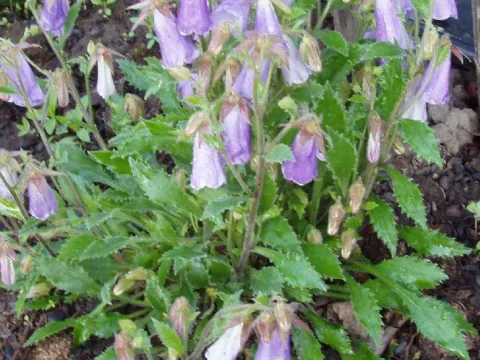
Symphyandra wanneri
Campanula wanneri
Symphyandra wanneri is a perennial herb belonging to the Campanulaceae family. Native to the mountainous regions of Southeastern Europe, it is well-adapted to rocky habitats, crevices, and slopes, which makes it a sought-after plant for specialized garden enthusiasts.
What the section contains
Symphyandra wanneri
The plant features distinct pubescent foliage and elegant, bell-shaped nodding flowers that typically bloom in shades of pale violet or soft blue. It maintains a compact stature, usually rising to 20–40 centimeters, which is ideal for alpine rock gardens or container gardening.
Success in cultivation requires soil with excellent drainage, as the roots are sensitive to stagnant moisture. It thrives best in partial shade, mimicking the protected conditions of mountain crevices, where it is shielded from the harsh intensity of midday summer sun.
Optimal growth is achieved in cool, calcium-rich, and moderately moist soils. Maintaining the right moisture balance is critical; while the plant dislikes drought, it is equally prone to suffering if the substrate remains waterlogged for extended periods during the year.
In landscape use, Symphyandra wanneri is prized for its long-lasting summer blooms. It is recommended for rockeries, crevice gardens, and as a border plant in cool-climate settings, where it provides a refined, naturalistic aesthetic to any landscape design.
Slugs and snails are the primary pests that target this species, often causing significant damage to the soft leaves and developing flower buds. Setting up physical barriers or monitoring at dusk are effective ways to protect the plant from these mollusks.
Root rot is the most common disease associated with poor drainage and excessive moisture. It is crucial to ensure that the soil is gritty enough to prevent water from collecting around the root crown, especially during the dormant winter months.
Powdery mildew may occur if the plant is grown in conditions with poor airflow and high humidity. Ensuring adequate space between plants and maintaining good ventilation around the foliage are essential preventative measures against this fungal pathogen.
Aphids can occasionally infest the young shoots and flower stalks, weakening the plant. Early detection and the use of targeted biological controls or mild insecticidal soaps are usually sufficient to manage these populations without damaging the plant.
Providing the correct environmental conditions—specifically adequate light and sharp drainage—greatly improves the plant's natural resistance to diseases. Healthy, well-ventilated plants are significantly less likely to attract pests or develop infections.