
Clasping Venus looking-glass
Triodanis perfoliata
Description
Growing requirements
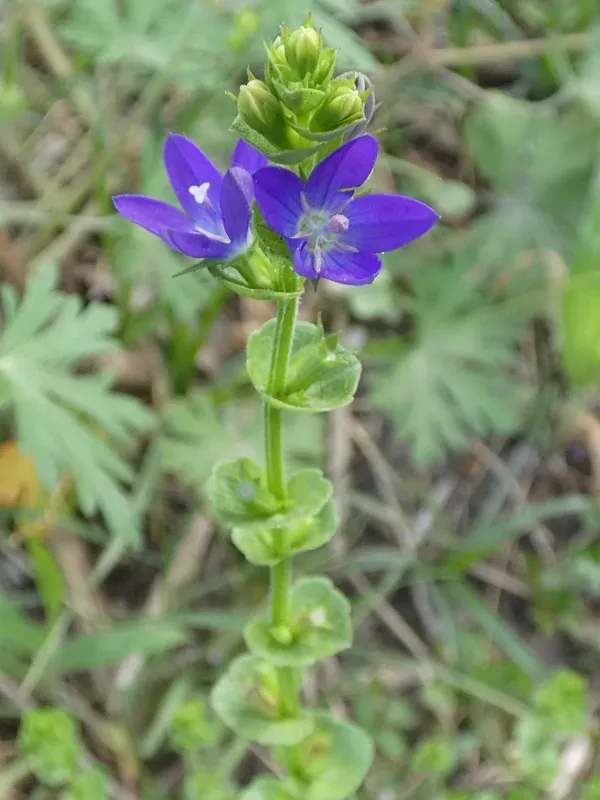
The Clasping Venus looking-glass (Triodanis perfoliata) is an annual herb belonging to the Campanulaceae family. It is recognized for its distinctive perfoliate leaves that clasp the stem, giving the plant its common botanical name.
Native to North America, it thrives in a variety of habitats including prairies, open woods, and disturbed soils. It has successfully naturalized in various temperate regions globally due to its robust seed production.
This plant prefers well-drained, sandy or loamy soils with moderate moisture levels. It performs best under full sun but demonstrates high adaptability to partial shade, making it a competitive species in diverse environments.
Botanically, it features two types of flowers: open (chasmogamous) and closed (cleistogamous). The closed flowers self-pollinate, ensuring seed production even under stressful conditions or lack of pollinator activity.
Agricultural management primarily focuses on its control, as it can behave as an invasive weed in cultivated fields. Proper soil preparation and timely mechanical weeding before seed set are the standard practices for mitigation.
Main diseases and pests
Triodanis perfoliata exhibits notable resilience against common agricultural pathogens, largely due to its opportunistic reproductive strategy and rapid life cycle that often avoids peak pest seasons.
Powdery mildew can occur on the foliage during periods of stagnant, humid air, particularly if the plant density is high or if it is surrounded by other competitive vegetation that limits airflow.
Insect pests, including aphids and occasional leaf-feeding beetles, may target the plants during the succulent vegetative stage. However, damage is rarely severe enough to necessitate specialized chemical intervention.
The primary concern for farmers is the seed bank longevity, as the plant produces an abundance of seeds that can persist in the soil and emerge over several subsequent growing seasons if not managed properly.
Effective control involves integrated pest management (IPM) strategies, combining mechanical cultivation with the maintenance of field borders to prevent the spread of its prolific seed pods into the main crop area.