
Wahlenbergia campanuloides
Wahlenbergia campanuloides
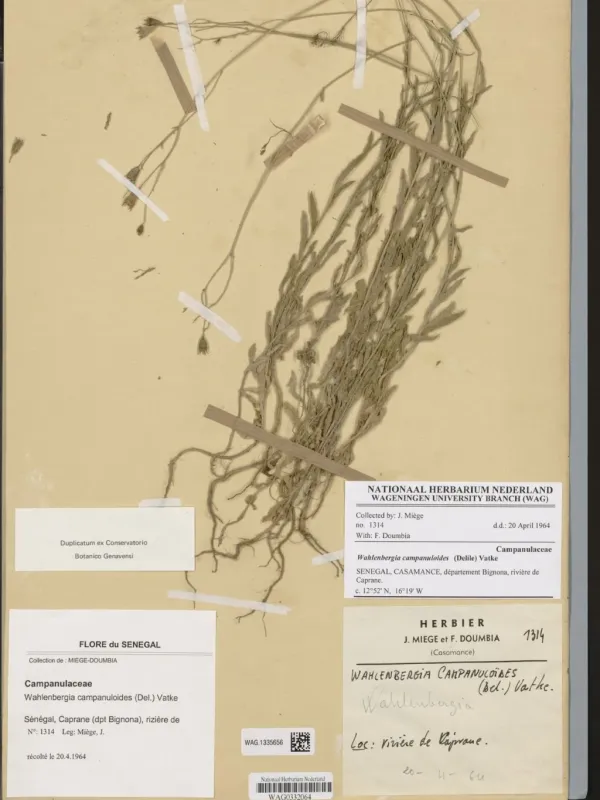
Description
Growing requirements
Wahlenbergia campanuloides is a delicate herbaceous perennial belonging to the Campanulaceae family. It is widely recognized in horticultural circles for its aesthetic appeal, characterized by bell-shaped flowers that bloom in abundance during the growing season.
Originating from regions with mild to temperate climates, specifically parts of Southern Africa, this species thrives in environments where sunlight is plentiful and the thermal regime is consistent. It is best suited for rock gardens, containers, or as a decorative border plant in well-tended landscapes.
The soil requirements for this crop are quite specific: it demands a well-draining, nutrient-rich medium with a neutral pH. It is essential to ensure that the growing site does not retain excess water, as the root system is highly susceptible to hypoxia and subsequent decay in waterlogged soils.
Cultivation practices involve maintaining adequate moisture levels while avoiding water stagnation. During the peak of summer, it is necessary to monitor soil moisture carefully, as the plants can stress quickly under prolonged dry conditions, particularly if grown in pots where evaporation rates are higher.
Fertilization should be handled with care. A balanced, slow-release fertilizer applied at the beginning of the growing cycle is usually sufficient to support the plant's development. Excessive nitrogen fertilization should be strictly avoided to prevent leggy growth and to ensure a compact, flowering-heavy habit.
Main diseases and pests
The primary biological threats to Wahlenbergia campanuloides are related to pathogenic fungi. Botrytis and root rot are common in environments with high humidity and poor air circulation. Improving drainage and thinning out plant spacing are effective preventive strategies against these issues.
Insect pests, including aphids and spider mites, can infiltrate the plants, causing leaf chlorosis and stunted growth. Regular inspection of the undersides of the foliage is recommended, and the application of horticultural soap or essential oils can often mitigate initial infestations without damaging the plant.