
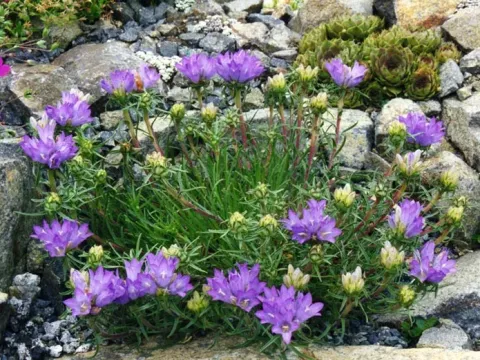
Edraianthus serbicus
Edraianthus serbicus
Sowing seeds of Edraianthus serbicus requires patience, as the seeds are fine and thrive best after a period of cold stratification to break dormancy.
What the section contains
Edraianthus serbicus
The optimal time for indoor sowing is late winter, allowing the seedlings to establish a strong root system before being moved to the outdoor rockery.
Using a mix of grit and sterile seed-starting compost prevents the damping-off disease which is common in small alpine seedlings.
Seedlings should be moved into individual small pots as soon as they are large enough to handle, ensuring the root ball remains intact during transition.
Hardening off the plants before permanent placement is crucial to help them adapt to direct sunlight and fluctuating temperatures of the alpine environment.
Edraianthus serbicus is a member of the Campanulaceae family, native to the Balkan mountain ranges, well-adapted to harsh rocky conditions.
This species requires an exceptionally well-draining, gritty soil, preferably with a neutral to alkaline pH level for optimal growth and flowering.
Full sun exposure is mandatory for this plant, as it helps maintain the tight, cushion-like habit that makes it so valuable in rock garden design.
Watering should be managed carefully, ensuring the soil dries out between applications to prevent rot, which is the most common cause of plant failure.
Maintenance involves minimal fertilization, as this species is adapted to nutrient-poor soils; excessive feeding leads to leggy and weak growth.
Root rot is the most significant threat to the health of Edraianthus serbicus, typically caused by waterlogged soil and inadequate drainage.
Slugs and snails often target the young, tender foliage and flower buds, necessitating the use of protective barriers or bait during the spring.
Aphids might attack the plant during the blooming period, affecting the vigor of the flowers and requiring targeted management if populations spike.
Fungal infections of the crown can occur in damp, humid summers, which is why placing gravel mulch around the base is a vital cultural practice.
To ensure long-term survival, plants should be monitored for signs of stress, such as yellowing leaves, which often signal soil moisture imbalances.