
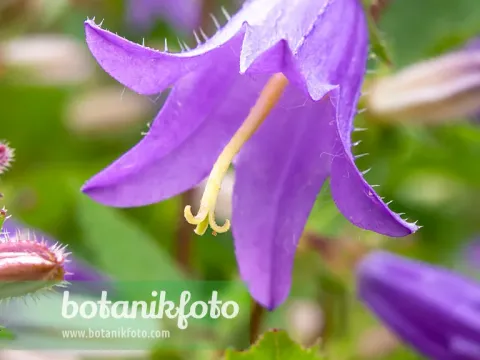
Campanula grossekii
Campanula grossekii
Campanula grossekii, known as Grosseck's bellflower, is a perennial herbaceous plant belonging to the Campanulaceae family. It originates from Central and South-Eastern Europe and is favored for its architectural stature and deep blue-violet blossoms.
What the section contains
Campanula grossekii
Botanically, the plant features erect, often branched stems with serrated leaves. The flowers are typically arranged in dense racemes, blooming throughout the summer months, providing significant visual interest in garden borders.
The plant thrives best in locations that offer partial shade to full sun. It is particularly well-adapted to well-drained, lime-rich soils. Ensuring good drainage is essential to prevent root rot during wet spring or autumn seasons.
In terms of climate, it is a hardy perennial, though it benefits from mulch in colder regions to protect the crown during winter. It is relatively drought-tolerant once established but performs best with consistent moisture during its peak growing phase.
Cultivation practices involve regular deadheading of spent flower stalks to encourage secondary blooms. Propagation is commonly achieved through seed sowing in spring or by division of mature clumps in early autumn or spring.
The most significant pests affecting this species are slugs and snails. These mollusks target succulent new growth, particularly in damp environments. Gardeners should employ barriers or bait traps to manage their population effectively.
Fungal diseases such as powdery mildew can become a concern if plants are crowded and air circulation is poor. Maintaining adequate spacing between specimens helps reduce the humidity around the foliage and lowers the risk of infection.
Root rot is a common issue caused by waterlogged soils or excessive irrigation. It is critical to ensure that the planting site has adequate permeability, especially in areas with heavy clay or poor natural drainage.
Aphids occasionally colonize the tips of young stems. While rarely fatal, they can weaken the plant and cause distorted growth; soap-based sprays or systemic insecticides are usually sufficient for effective control.
Proper sanitation, including the removal of dead or diseased foliage at the end of the season, is crucial for disease prevention. Maintaining plant health through proper nutrition and water management is the best defense against pests.