
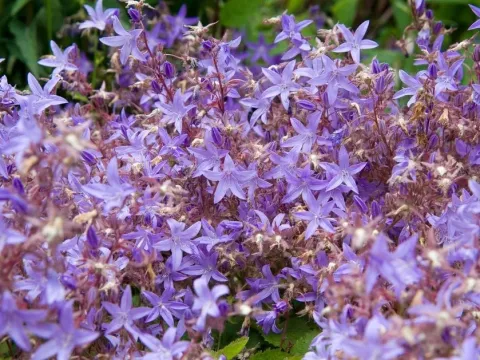
Campanula elatines
Campanula elatines
Sowing seeds of Campanula elatines is best done in autumn as the species requires a period of cold stratification to break dormancy and ensure consistent germination.
What the section contains
Campanula elatines
If sowing indoors, seeds should be placed in containers in late winter and kept in a cold frame or refrigerator to simulate natural climatic conditions.
The seeds are exceptionally small, so they must be sown on the surface of the growing medium and pressed gently without being covered by soil layers.
Maintaining a constant, light level of moisture is crucial for successful germination, as the seeds are highly sensitive to drying out during the process.
Once seedlings have developed their first set of true leaves, they should be hardened off before being transplanted into their final location in the garden.
Campanula elatines, a member of the Campanulaceae family, is a delicate perennial native to the rocky regions of Northern Italy, thriving in limestone crevices.
The plant requires well-draining, stony, and alkaline soil conditions that mimic its natural habitat to prevent root rot and ensure healthy development.
It prefers a location that receives full sun or partial shade, provided that it is protected from the intense heat of the afternoon in warmer climates.
Proper drainage is the most critical factor for success; the plant should never be allowed to sit in waterlogged soil, as it is highly susceptible to crown rot.
In terms of growth habits, it forms beautiful, cascading rosettes, making it an ideal candidate for rock gardens, stone walls, and alpine troughs.
The most significant threats to Campanula elatines include fungal crown rots, which often develop if the planting site lacks proper drainage or airflow.
Slugs and snails are major pests that can damage the foliage and flowers, particularly during periods of frequent rainfall or high humidity levels.
Aphids can occasionally cluster on tender shoots, and regular monitoring is recommended to prevent them from sapping the vigor of the plant.
In poorly ventilated environments, powdery mildew may appear, causing white spots on leaves and reducing the aesthetic appeal of the perennial.
Good garden hygiene, such as removing dead foliage and maintaining adequate spacing between plants, is essential for reducing the incidence of these pests.