
Campanula cymbalaria
Campanula cymbalaria
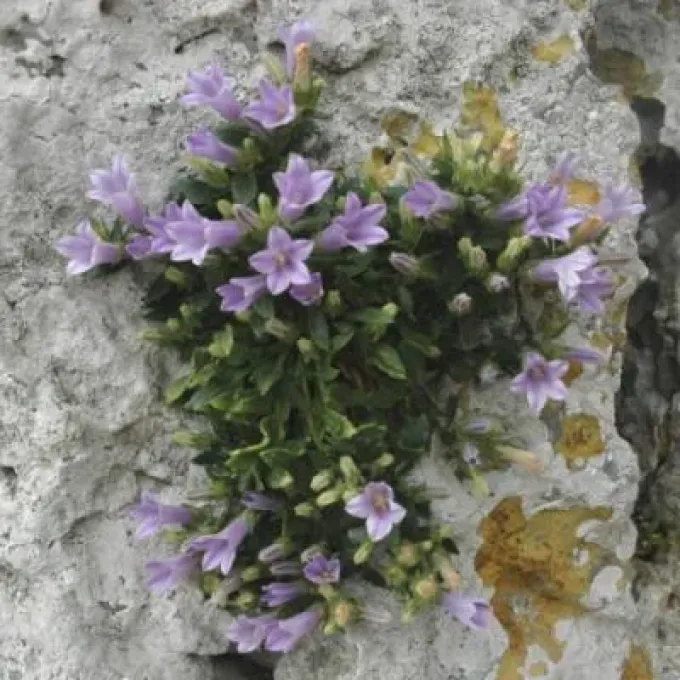
Description
Growing requirements
Campanula cymbalaria is a perennial herbaceous plant belonging to the Campanulaceae family. It is native to the rocky terrains of the Caucasus and the Middle East, which determines its specific adaptation to mountain environments.
The plant features delicate trailing stems and small, heart-shaped leaves. Due to its sprawling growth habit, it is highly valued in rock gardening and as a groundcover for slopes or stone walls where drainage is optimal.
The primary requirement for this species is a well-draining, rocky, or gritty soil substrate. It struggles in heavy, clay-based soils that retain moisture, as the crown of the plant is prone to rotting when kept in soggy conditions.
Regarding light, it prefers partial shade or dappled sunlight. While it can tolerate some morning sun, full exposure during the hottest parts of the day can cause leaf desiccation, especially in lower-altitude climates.
Maintenance involves minimal fertilization. As a rock-dwelling species, it is adapted to nutrient-poor soils. Over-fertilizing, particularly with nitrogen, leads to weak, leggy growth and reduces the plant's natural hardiness.
Main diseases and pests
The most significant threat to Campanula cymbalaria is fungal infection caused by stagnant moisture. Root rot and damping-off are common issues when air circulation is poor or the soil moisture levels are too high.
Slugs and snails are the most prominent pests, often targeting the soft foliage during humid spring and autumn months. Physical barriers, such as crushed gravel or specialized organic repellents, are recommended for protection.
Proper plant hygiene is essential to prevent disease outbreaks. Removing dead foliage after the flowering season and ensuring the base of the plant remains dry are critical cultural practices for long-term health.
In cases where fungal outbreaks occur, systemic fungicides should be applied with caution. It is always better to focus on improving the environment—specifically drainage and airflow—rather than relying solely on chemical intervention.
Monitoring for pests during the early growing season is vital. Early intervention ensures that the plant retains its aesthetic appeal and continues to spread effectively across its designated growing area.