
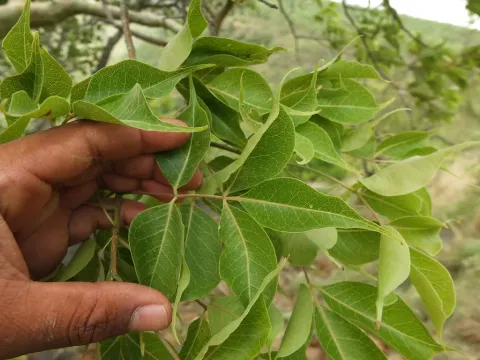
Commiphora caudata
Commiphora caudata
Commiphora caudata is a unique woody species belonging to the Burseraceae family. It is native to the tropical dry deciduous forests of India and Sri Lanka, where it has evolved to thrive in hot, arid conditions.
What the section contains
Commiphora caudata
The plant requires full sun exposure to flourish. High-intensity light is crucial for photosynthesis and the development of its aromatic secondary metabolites, which define the plant's economic value.
Soil composition must be highly porous and well-draining. Cultivators should prioritize sandy or rocky substrates to mimic the plant's natural habitat and avoid waterlogging, which is lethal to the root system.
Ideal temperatures range between 25°C and 35°C. The species is highly sensitive to cold and requires thermal protection whenever the ambient temperature drops significantly, especially during the dormancy phase.
Economically, this species is cultivated primarily for its resin. The chemical constituents of Commiphora resins are widely utilized in traditional medicine, the perfume industry, and specialized cosmetic production.
Root rot remains the most significant threat to Commiphora caudata, particularly when watering regimes are mismanaged during cooler, low-light seasons.
Common pests affecting this culture include spider mites and mealybugs. These pests thrive in dry environments and can quickly weaken the plant if left untreated.
Effective management strategies include manual removal of pests, the use of targeted insecticidal soaps, or systemic treatments applied at the first sign of infestation.
Lack of proper air circulation within the canopy can lead to fungal infections. Ensuring adequate spacing between plants and maintaining a clean growing environment is vital for health.
To ensure long-term productivity, growers must monitor moisture levels closely and implement regular pruning to promote airflow and prevent the accumulation of moisture-loving pathogens.