
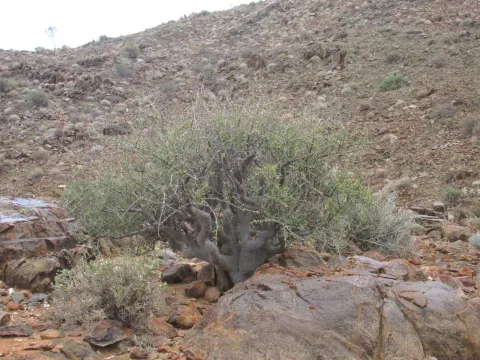
Commiphora capensis
Commiphora capensis
Commiphora capensis is a distinct species of succulent tree belonging to the Burseraceae family. It is native to the arid landscapes of Southern Africa, thriving in rocky, desert-like environments where rainfall is extremely sporadic.
What the section contains
Commiphora capensis
Botanically, the plant is distinguished by its swollen, drought-resistant trunk and small, ephemeral leaves that appear only during short periods of adequate moisture. It is a slow-growing species highly adapted to heat stress.
Cultivation requires a substrate that mimics its natural stony habitat. A mixture of horticultural grit, coarse sand, and a small proportion of loam is ideal for promoting healthy root development and preventing waterlogging.
The plant requires full sun exposure to maintain its compact growth habit. It is highly intolerant of cold and frost, meaning it must be kept in controlled temperature environments if grown outside its natural range.
Watering frequency should be significantly reduced during the winter months, allowing the soil to dry out completely. Regular monitoring of the soil moisture is the primary component of successful agricultural management for this crop.
The most significant threat to Commiphora capensis is root rot, caused by overwatering or poor drainage. Once established, this fungal infection can move rapidly through the succulent tissues, often making recovery impossible.
Common agricultural pests include mealybugs and scale insects. These organisms thrive in the dry, sheltered crevices of the bark, extracting sap and weakening the plant's structural integrity.
Integrated pest management involves physical removal of visible insects combined with localized application of systemic insecticides. Care must be taken to ensure the chemicals are safe for succulent botanical species.
Fungal infections can be mitigated by ensuring proper air circulation around the plant. Stagnant air coupled with even slight increases in humidity can trigger the development of mold and mildews.
Maintaining a strict hygiene protocol in the growing area is crucial to prevent the spread of soil-borne pathogens. Using sterilized pots and tools helps preserve the health of the specimens.