
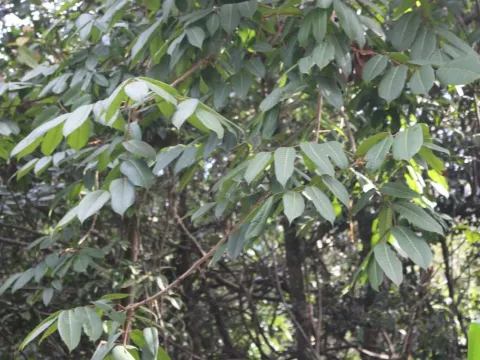
Ceylon Canarium
Canarium zeylanicum
The Ceylon Canarium (Canarium zeylanicum) is a tall evergreen tree belonging to the Burseraceae family. It is characterized by a robust trunk and a wide-spreading canopy, which provides significant shade in its natural tropical habitat.
What the section contains
Ceylon Canarium
Native to the forests of Sri Lanka, the species thrives in moist, tropical lowland environments. It requires deep, fertile, and well-drained soils to prevent root rot and ensure healthy development of its extensive root system.
The ideal climate for this culture is characterized by high humidity and stable, warm temperatures, typically ranging between 24°C and 30°C throughout the year. The tree does not tolerate frost or cold winds, which can damage its foliage.
When establishing a plantation, providing sufficient space is crucial, as the tree attains a large size at maturity. Protection from direct, high-velocity winds is also recommended to prevent mechanical damage to the branches.
Propagation is primarily done through seeds. Fresh seeds should be sown in nursery beds with high-quality substrate and maintained under consistent moisture levels to ensure a high germination rate for new seedlings.
The primary economic output of Canarium zeylanicum is its edible fruit, which contains a nutritious kernel. These nuts are highly valued for their high oil and protein content, often utilized in traditional local culinary practices.
Beyond the nuts, the tree produces a fragrant resin that has long been recognized for its medicinal and industrial applications. It is traditionally used in the preparation of incenses and various herbal remedies, adding value to the crop.
The wood of the Ceylon Canarium is also commercially relevant. Known for its durability and resistance to tropical pests, it is frequently used by local artisans for furniture making and structural woodwork in rural areas.
Yields typically stabilize once the trees reach their reproductive maturity. Consistent agricultural care, including organic mulching and soil aeration, significantly enhances the nut production capacity of each tree.
The integration of this tree into agroforestry systems is a sustainable practice. By providing both food security and raw materials, the Ceylon Canarium remains a vital component of the local agricultural landscape in its native range.
Harvesting is traditionally done by hand when the fruits reach full maturity, indicated by the change in skin color. Careful handling is necessary to ensure the longevity of the fruit and to protect the underlying branch structure.
Post-harvest management involves the removal of the fleshy outer layer, followed by a thorough drying process in a shaded, well-ventilated area. Rapid drying prevents the development of mold, which could otherwise degrade the quality of the kernel.
For storage, the kernels should be kept in cool, dry conditions away from direct sunlight. This practice is essential to maintain the structural integrity of the nuts and to prevent the oxidation of natural fats.
Processing the nuts requires equipment capable of breaking the hard shell without damaging the delicate kernel inside. Industrial-grade mechanical crackers are preferred to maximize the percentage of whole kernels for premium markets.
The final product is typically graded based on size and purity. Due to their unique flavor and nutritional profile, Ceylon Canarium nuts have potential for niche markets, supporting the economic stability of local growers.