


Reference · Crops
Sisymbrium
Sisymbrium
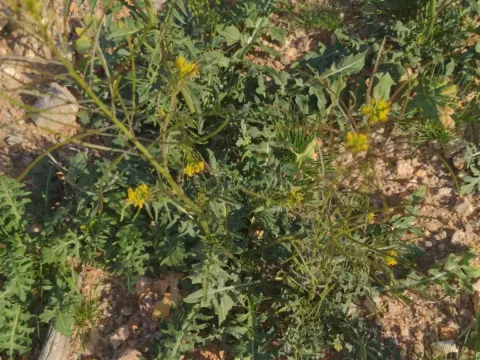
Sisymbrium is often an ephemeral plant, meaning its germination timing depends on the biological type of the species. Winter forms germinate in late summer or early autumn, forming a rosette of leaves that successfully survives under snow cover.
5
items
What the section contains
Marketplace
Products in this section · 12


Hepi Star, WG (tribenuron-methyl, 750 g/kg)
Fabrika Agrokhimikatov
Herbicides
0
0
1 offer
25.1 €за кг
Buy

TRU, WG, (Tribenuron-methyl, 750 g/kg)
Sharda Worldwide Exports Pvt Ltd, Sharda World
Herbicides
0
0
1 offer
75.76 €за кг
Buy

Sisymbrium
Spring forms begin active vegetation early in the season as soon as the soil reaches temperatures of 4–6 degrees Celsius. The seeds possess high germination rates, allowing the crop to rapidly occupy available space in the field.
When sown for cover cropping or medicinal purposes, seeds are planted using row sowing. The optimal seeding depth is no more than 1–2 centimeters, as the small seeds require firm contact with moist soil to initiate growth.
Sowing in field conditions is conducted as early as possible so the plants can accumulate vegetative mass before the peak of summer heat. In arid regions, cultivating Sisymbrium requires supplemental irrigation during the initial establishment phase.
The growth intensity of the culture allows for full emergence within 7–10 days after planting. A crucial condition is to avoid deep burial, which significantly reduces the germination energy and the overall percentage of plant emergence.
As a member of the Brassicaceae family, the plant has standard requirements for its growth conditions. It prefers sunny, well-lit areas with well-drained soil, which helps prevent the rotting of the root system.
Sisymbrium adapts well to various soil types, including loams and sandy soils. However, the most active development is observed on fertile lands with a neutral or slightly alkaline pH level.
The culture exhibits high resistance to low temperatures, which is explained by its wide distribution in temperate latitudes. Mature plants are capable of withstanding brief frosts without losing reproductive functions.
An important factor for development is the availability of moisture in the first half of the growing season. During prolonged drought, the plant shifts to the flowering phase more rapidly, which significantly reduces total vegetative mass and lowers potential yield.
The crop is light-loving and does not tolerate overcrowded stands or heavy shading by taller vegetation. Under conditions of high humidity and insufficient air circulation, outbreaks of fungal diseases are possible.
The economic productivity of Sisymbrium is primarily assessed by the yield of green mass, which can be used as green manure or as a fodder supplement. Under favorable conditions, the yield of green mass ranges from 150 to 250 quintals per hectare.
Seed harvesting is possible once the pods reach full maturity; however, it is critical to account for the tendency of the pods to shatter. Average seed yield varies from 5 to 12 quintals per hectare depending on the level of agrotechnical management and weather conditions.
The oil content in the seeds of certain Sisymbrium species makes them a promising raw material for industrial processing. Research indicates that with proper management, it is possible to increase oil extraction efficiency to 30–35 percent of the total dry seed weight.
Crop yield strongly correlates with the density of plant stands per unit area. Sparse stands lead to excessive branching, whereas optimal spacing encourages the formation of strong flowering stems with a high number of pods.
An additional factor in yield is the availability of pollinators. Despite the capacity for self-pollination, insect visitation to the flowers noticeably improves pod set and the seed mass within each individual pod.
Sisymbrium is susceptible to standard Brassicaceae diseases, with downy mildew being the most significant threat. It manifests as yellowish spots on the leaves and can rapidly devastate young crops under conditions of high humidity.
Among pests, cruciferous flea beetles cause the most damage, attacking seedlings during the cotyledon phase. To prevent losses, preventative insecticide treatments should be applied during the early stages of development.
The plant may also be affected by aphids, which suck sap from young shoots and inflorescences, leading to stem distortion and reduced seed quality. Affected areas often become centers for the development of viral diseases.
In waterlogged soil conditions, there is a risk of root rot caused by fungi of the genus Fusarium. This infection leads to premature wilting of plants and the loss of the ability to form quality seeds.
- Adhere to crop rotation practices to reduce the infection background.
- Conduct regular field monitoring to detect pest presence early.
- Timely removal of weed vegetation in row spacing.
- Use high-quality, treated seed materials for planting.
Harvesting is conducted during the wax-ripe phase of the seeds, when most of the pods have turned a characteristic yellowish or brownish color. It is vital to avoid letting the pods dry out completely in the field to prevent significant losses due to shattering.
Direct combining is used for seed harvesting if the crop matures uniformly across the field. In cases of uneven maturation, it is recommended to swath the crop first, followed by combining after 2–3 days of drying.
Harvested material requires mandatory cleaning of impurities and drying to a moisture content of 10–12 percent. Seed storage must take place in dry, well-ventilated rooms to prevent self-heating and mold development.
If the goal of cultivation is to use the green mass as green manure, harvesting is performed at the budding stage before the onset of active flowering. In this period, the plant contains the highest concentration of nitrogen compounds and micronutrients.
When using Sisymbrium for medicinal raw materials, harvest is conducted during the period of mass flowering. The plant is cut at a height of 5–10 centimeters from the ground, taking care to preserve the integrity of the leaves for quality drying.