
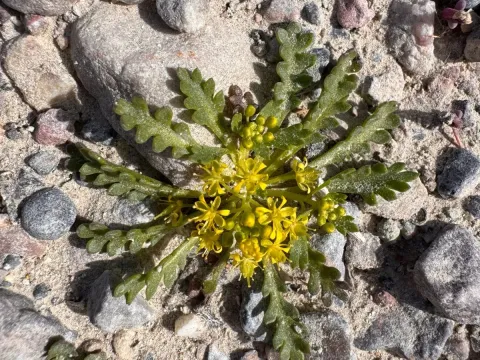
Lepidium flavum
Lepidium flavum
Sowing of Lepidium flavum is typically initiated in the spring when soil temperatures stabilize between 8 and 10 degrees Celsius. Seeds should be sown at a depth of 1-2 centimeters to ensure adequate soil moisture contact and to promote uniform germination.
What the section contains
Lepidium flavum
Fast development during the early stages is a key characteristic of this crop, provided that soil moisture remains consistent. Early sowing is recommended to establish a strong root system before the onset of high summer temperatures.
Row spacing is generally maintained at 15-20 centimeters to provide sufficient space for plants to develop their basal rosettes. Precise seed placement is crucial, as the crop benefits significantly from consistent spacing to minimize competition.
Soil preparation must focus on creating a fine, weed-free tilth, which is essential for the germination of small seeds. Any cloddy or compacted soil may impede the emergence of the tender seedlings, reducing overall crop density.
In regions with milder climates, late autumn or winter sowing can be considered if soil conditions allow. This practice leverages winter moisture to secure an earlier harvest in the following season.
Belonging to the Brassicaceae family, Lepidium flavum performs best in well-drained, fertile soils. Light loams or sandy soils with a neutral pH are preferred to ensure optimal root growth and prevent waterlogging.
This crop is strictly light-demanding and requires full sun exposure for the duration of its growth. Even partial shading during the main vegetative phase can lead to reduced leaf production and physiological stress.
Water requirements are moderate, with consistent moisture needed during the initial growth stages. Once established, the crop demonstrates some resilience to dry conditions, but excessive soil moisture should be avoided to prevent root rot.
Temperature management is key to successful yields, with an ideal vegetative range of 18-25 degrees Celsius. Extreme heat may trigger premature bolting, which reduces the commercial value of the biomass.
Balanced nutrient application, particularly nitrogen during early vegetative stages, is essential to maximize crop yield. Over-fertilization should be avoided to prevent excessive succulent growth that may be prone to damage.
Crucifer flea beetles are the most frequent pests, posing a significant threat to young seedlings by eating holes in leaves. Integrated pest management strategies are often required to maintain crop health during the seedling phase.
Powdery mildew can occur in dense stands or during periods of high humidity and poor air circulation. Managing plant density and ensuring sufficient spacing are the most effective preventative measures against fungal outbreaks.
Root rots are common in poorly drained fields, especially during excessively wet seasons. Proper site selection and drainage management are critical to preventing significant yield loss due to water-related root diseases.
Caterpillars, including those of various white butterflies, can cause significant leaf damage. Regular field monitoring is necessary to identify infestations early and apply appropriate biological or chemical controls if necessary.
Crop rotation is mandatory to prevent the build-up of Brassicaceae-specific pathogens in the soil. A minimum interval of three years between plantings of the same family is standard practice to maintain field health.