
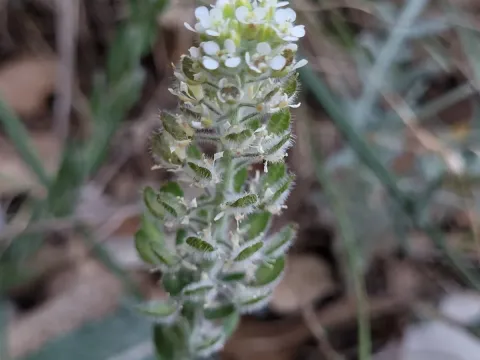
Lepidium hirtum
Lepidium hirtum
Lepidium hirtum, commonly known as rough-haired pepperwort, is a herbaceous plant belonging to the Brassicaceae family. Cultivation typically begins in early spring, once the soil temperature is sufficient to support consistent germination.
What the section contains
Lepidium hirtum
Seeds should be sown at a shallow depth of 1–2 centimeters to ensure they receive the necessary light for uniform emergence. Row spacing should be approximately 20–30 centimeters to provide adequate airflow and space for plant development.
It is essential to use high-quality, cleaned seeds to prevent the introduction of weeds or pathogens into the field. Proper seedbed preparation, including fine-tilth cultivation, is critical for successful crop establishment.
After sowing, rolling the soil surface is recommended to establish good seed-to-soil contact. This practice retains soil moisture around the seeds and significantly improves the uniformity of the initial crop stand.
In regions with appropriate climate conditions, early thinning may be necessary if the seeding density is too high. Removing redundant plants ensures that the remaining specimens have enough resources for healthy growth.
Rough-haired pepperwort thrives in sunny environments and is highly sensitive to shading, which can cause excessive elongation of the plant and reduce its leaf quality. Full sun exposure is ideal for maximum productivity.
The plant prefers well-drained, fertile, loamy, or sandy-loam soils with a neutral pH level. Waterlogged conditions must be avoided as they often lead to root rot and other physiological stressors for the crop.
The species is well-adapted to cool-temperate conditions, with an optimal growth temperature range between 15°C and 22°C. Excessive heat exposure often triggers early bolting, which negatively affects the marketability of the green harvest.
Adequate moisture is required throughout the vegetative phase. During periods of drought, supplemental irrigation is necessary to maintain the freshness and crispness of the leaves, which are key quality indicators.
Fertilization should be balanced, emphasizing phosphorous and potassium for root and structural development. Excessive nitrogen application should be avoided as it can soften the leaf tissue and reduce its shelf life.
The most significant threat to Lepidium hirtum is the flea beetle, which can rapidly cause severe damage to young foliage. Integrated pest management, including the use of floating row covers, is highly effective for protection.
Fungal diseases, such as downy mildew and powdery mildew, are common risks in high-humidity conditions or areas with poor air circulation. Crop rotation is essential to break the infection cycle of soil-borne pathogens.
Root rot caused by Phytophthora or similar fungi can occur if drainage is insufficient. Regular monitoring and maintaining soil health are key strategies for mitigating these risks effectively.
Aphids can pose a challenge, particularly in the later stages of growth. Monitoring fields and utilizing biological control agents, such as beneficial insects, can help keep populations below the economic injury level.
- Strict adherence to crop rotation cycles.
- Ensuring proper soil drainage.
- Using clean, disease-free seed batches.
- Weed management to eliminate alternative hosts.
Harvesting Lepidium hirtum is a time-sensitive operation. The crop should be collected before the transition to the reproductive phase, as leaf quality significantly deteriorates once the plant starts bolting.
Manual harvesting is often preferred for fresh market quality, allowing for selective picking and minimal damage to the leaf tissue. The use of sharp blades ensures a clean cut, promoting better post-harvest shelf life.
For industrial-scale production, mechanical harvesters adjusted for delicate leafy crops are used. These machines must be set to the appropriate height to avoid including woody stalks in the harvested material.
Post-harvest management is crucial; the crop should be cooled immediately after picking to remove field heat. Storing the produce at 1–3°C with high humidity is the industry standard for maintaining freshness.
The harvested product must be carefully packaged to prevent wilting. Proper logistics ensure that the product reaches the consumer or processing facility in optimal condition, preserving its nutritional profile.