
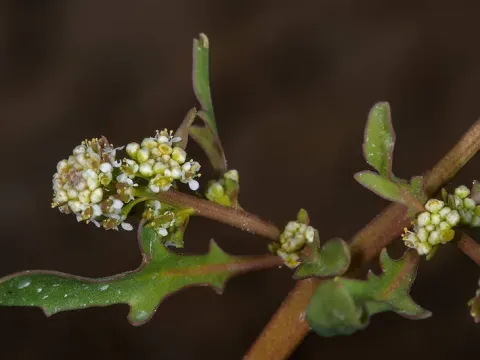
Lepidium aucheri
Lepidium aucheri
Lepidium aucheri is an annual herbaceous plant belonging to the Brassicaceae family, known for its adaptability to specific arid environments.
What the section contains
Lepidium aucheri
The sowing season typically begins in early spring, as soon as the soil is sufficiently workable to ensure optimal germination and early root development.
Uniform seeding depth is essential for this crop, with recommended placement at approximately 1 to 2 centimeters below the soil surface.
Proper seedbed preparation ensures good soil-to-seed contact, which is vital for the germination of these small, hardy seeds.
Row spacing should be managed to minimize inter-plant competition while allowing for necessary field maintenance and weed control operations throughout the season.
This species shows remarkable tolerance to drought conditions and can perform well in various types of soil, including those with moderate salinity levels.
For best results, Lepidium aucheri requires full sun exposure and well-drained, sandy or loamy soils to prevent root stress and development issues.
Climate requirements include a moderate temperature range during the vegetative phase, followed by warmer conditions to support seed maturation.
Soil nutrient status should be monitored, although the plant does not require heavy fertilization to achieve satisfactory biomass production.
It is crucial to avoid low-lying areas where water might accumulate, as the root system is sensitive to prolonged waterlogging in heavy soils.
Crucifer pests, specifically flea beetles, are a significant threat during the emergence phase and can cause substantial defoliation if left unchecked.
Fungal pathogens such as mildew can develop if the microclimate within the canopy becomes too humid, often due to improper spacing or excessive irrigation.
Integrated pest management strategies are recommended, focusing on crop rotation and the selection of disease-resistant management practices.
Early detection of infestation through regular field monitoring allows for precise application of pesticides, reducing overall environmental impact.
Maintaining a clean field environment by eliminating alternate host weeds is a fundamental step in preventing widespread disease outbreaks.
Harvesting requires careful timing to balance the maturation of seeds with their natural tendency to shatter when the capsules dry out.
Mechanical harvesting via combine harvester should be adjusted to minimize seed loss, ensuring all gaskets and conveyors are securely sealed.
Post-harvest management involves immediate cleaning and drying to reach moisture levels below 12 percent, which is critical for long-term storage safety.
Storage should be conducted in cool, dry facilities with regular aeration to prevent the development of mold and ensure the stability of the final product.
The quality of the harvested seeds is highly dependent on how quickly and thoroughly the material is processed after leaving the field.