
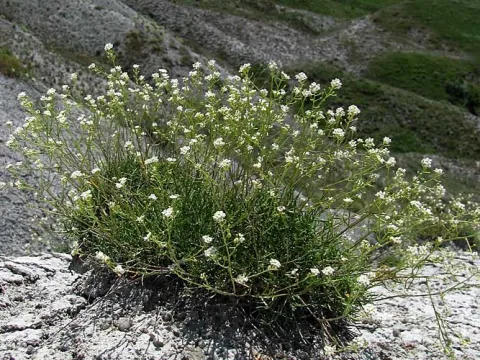
Lepidium meyeri
Lepidium meyeri
The sowing of Lepidium meyeri requires precise timing to ensure optimal crop establishment. Early spring is typically the preferred period, once the soil temperature consistently reaches favorable levels for germination.
What the section contains
Lepidium meyeri
Row planting with a spacing of approximately 30 centimeters is recommended for this crop. This configuration allows for adequate air circulation and provides sufficient space for the root system to develop fully.
Seeds should be sown at a shallow depth of 1 to 2 centimeters. Because the seeds are quite small, they require a firm, well-prepared seedbed and light compaction to ensure proper moisture uptake.
In arid climates, autumn sowing is sometimes utilized to leverage seasonal rainfall. This strategy helps the plants establish early, allowing them to benefit from the first signs of spring growth.
Adhering to recommended seeding rates is critical for maintaining uniform plant density across the field. Proper calibration of seeding equipment is essential for success in large-scale agricultural settings.
Lepidium meyeri is a member of the Brassicaceae family and is recognized for its impressive resilience. It adapts well to various soil types, including those with moderate salinity, which makes it a versatile choice for certain regions.
This crop thrives best in locations with high solar exposure. It is a light-demanding plant, and productivity can be significantly impacted if the crop is shaded by nearby vegetation or buildings.
The ideal temperature range for its development is between 18 and 25 degrees Celsius. The species exhibits strong tolerance to temperature fluctuations, which is common in its natural habitats.
Water requirements are moderate, but the plant is sensitive to waterlogging. Good soil drainage is crucial to prevent root rot and ensure the overall health and vigor of the crop throughout the growing season.
- Adaptability to diverse soil conditions.
- High drought resistance.
- Preference for sunny locations.
- Positive response to balanced fertilizer application.
The main threat to Lepidium meyeri involves crucifer flea beetles, which can cause significant damage during the initial growth stages. Early intervention is necessary to prevent complete loss of seedlings.
Fungal pathogens such as downy mildew can become a problem if conditions become overly humid. Proper spacing and avoiding excessive moisture in the canopy are the best preventive measures against these outbreaks.
Soil-borne nematodes may occasionally impact the root system. Implementing a diverse crop rotation cycle is an effective strategy for naturally reducing pest and disease pressures in the soil.
Integrated pest management (IPM) should be prioritized, combining physical, biological, and chemical methods. This approach ensures sustainable production while protecting the crop from major threats.
Regular field scouting is highly recommended throughout the vegetation period. Early detection of pests allows for localized treatments and prevents the widespread dissemination of diseases.
The harvest strategy for Lepidium meyeri is dictated by the intended end use of the crop. For seed production, harvesting should take place as soon as physiological maturity is reached to minimize loss.
When grown for forage, the harvest should occur before the stems become overly lignified. This ensures a higher nutrient concentration, particularly protein, which is vital for animal feed quality.
Post-harvest handling is critical for maintaining quality. The harvested material must be dried and cleaned promptly to avoid fungal contamination and degradation of the stored product.
For seed storage, moisture content should be kept at stable, low levels to maintain viability. Storing the crop in a cool, well-ventilated facility will prolong shelf life and preserve chemical characteristics.
Technical adjustment of machinery during the harvest phase is essential to reduce mechanical stress on the crop, ensuring the output meets the required market or farm standards.