
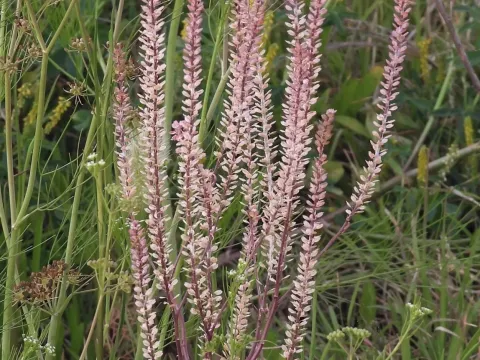
Lepidium auriculatum
Lepidium auriculatum
Lepidium auriculatum is a herbaceous plant belonging to the Brassicaceae family. In agronomy, this species is noted for its resilience and ability to thrive in challenging environments where typical agricultural crops might struggle due to limited resources.
What the section contains
Lepidium auriculatum
The crop prefers well-drained soil types, particularly light loams or sandy soils. It demonstrates a significant tolerance to alkaline soil conditions and does not require intensive fertilization, making it a low-input species for cultivation in arid or semi-arid regions.
Climatically, the plant is adapted to sunny, open areas. It has developed mechanisms to withstand seasonal droughts and heat, relying on its deep taproot system to extract moisture from deeper soil layers when surface moisture is depleted.
From an agricultural standpoint, Lepidium auriculatum can serve as a valuable resource for land stabilization and soil conservation efforts. Furthermore, research into its seed oil content suggests potential industrial applications, although large-scale commercial cultivation remains specialized.
The botanical structure of the plant features stems with distinct auriculate (ear-shaped) leaves at the base, which serves as a diagnostic feature. The plant typically produces racemes of small, white-to-yellowish flowers, leading to the formation of silicles characteristic of the mustard family.