
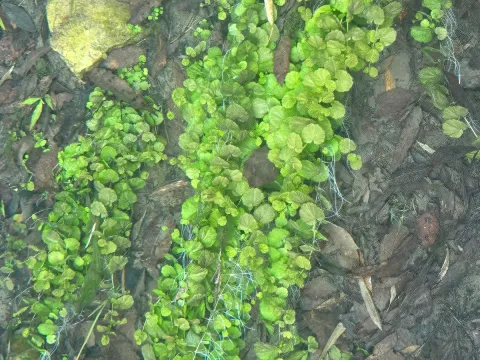
Chinese bittercress
Cardamine lyrata
Chinese bittercress (Cardamine lyrata) is a perennial herbaceous plant belonging to the Brassicaceae family. In agricultural and horticultural practices, particularly for indoor or aquatic cultivation, propagation is performed vegetatively.
What the section contains
Chinese bittercress
Stem cuttings, typically 5-10 cm in length, are used to propagate the crop. These cuttings develop root systems rapidly in water or moist nutrient-rich media, making it an efficient species for large-scale vegetative production.
Native to East Asia, including parts of China, Japan, and the Russian Far East, the plant naturally inhabits riverbanks, shallow waters, and marshy terrain. It is considered an amphibious plant capable of thriving both submerged and emersed.
Cultivation systems often utilize hydroponic setups to ensure constant access to nutrients. This method allows for the production of healthy, disease-free stock plants for trade and decorative usage.
Strategic placement in the nursery is essential. During the initial rooting phase, stable humidity levels are required to maintain turgidity in the leaves until the root system is established.
Temperature control is the most critical requirement for Chinese bittercress. The plant performs best in cool conditions, specifically between 15°C and 22°C; temperatures above 25°C generally lead to rapid deterioration.
High light intensity is essential for the plant to maintain its compact, rosette-like growth habit. Without sufficient photons, the stems will become leggy and the foliage will lose its characteristic vibrant green coloration.
A well-balanced nutrient program is necessary for optimal development. The plant is a heavy feeder and responds well to CO2 supplementation and liquid fertilizers rich in trace elements, especially iron.
Water quality must be monitored for pH stability, ideally kept between 6.0 and 7.5. Fluctuations in mineral content or excessive hardness can hinder nutrient uptake and trigger stress-related leaf drop.
The choice of substrate should allow for good aeration. In aquarium culture, fine-grained sand or specialized clay-based substrates are preferred to prevent the compaction that leads to root rot.
The plant is frequently targeted by aquatic snails, which can cause significant damage to the leaf tissue. Effective pest management requires regular monitoring and manual removal of these gastropods from the cultivation environment.
Algal blooms are a primary biological threat. Epiphytic algae can easily attach to the leaves, competing for light and nutrients, which eventually smothers the plant and necessitates immediate corrective action.
Chlorosis is a common physiological problem caused by iron deficiency. If the iron levels in the water or substrate drop too low, the leaves will turn yellow and brittle, eventually dying back completely.
Poor water circulation can lead to the accumulation of organic debris around the base of the plant, promoting the growth of anaerobic bacteria and localized stem decay.
- Snails and other aquatic herbivores.
- Invasive algae colonization on foliage.
- Nutrient deficiencies leading to chlorosis.
- Stem rot from stagnant water conditions.
- Temperature-induced stress leading to necrosis.