
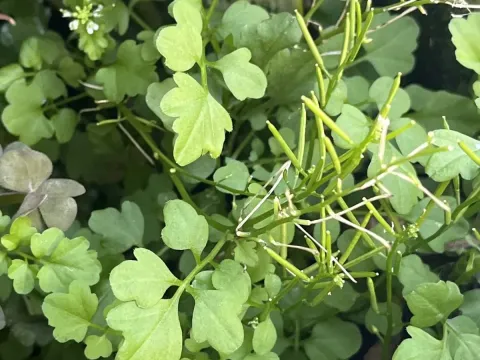
Cardamine occulta
Cardamine occulta
Cardamine occulta is an annual or biennial herbaceous plant known for its prolific self-seeding capability. The germination cycle typically begins in autumn or early spring when soil temperatures consistently remain above 5-8 degrees Celsius.
What the section contains
Cardamine occulta
In modern agricultural systems, this plant demonstrates high adaptability to various crop schedules. It is frequently found in winter grain fields, where its life cycle often begins concurrently with the emergence of the primary agricultural crops.
The seeds of this species possess high viability and can survive in the soil seed bank for extended periods. Germination is highly dependent on sufficient moisture levels, with mass emergence often triggered by periods of frequent rainfall.
Spring vegetative regrowth initiates immediately after the snow melts. Without competition from managed crops, Cardamine occulta can form dense mats, which significantly complicates field maintenance and crop development.
Agronomic management of sowing dates is a primary method for limiting the spread of this species. Effective pre-sowing tillage helps eliminate young rosettes, preventing the plant from reaching its reproductive stage and setting new seeds.
As a member of the Brassicaceae family, Cardamine occulta has specific environmental requirements. It thrives in moist, nitrogen-rich soils, making it a common occurrence in low-lying areas of fields or regions with poor drainage.
The plant exhibits successful growth in both full sun and partial shade environments. In agricultural fields, it often dominates in loamy soils with a neutral or slightly acidic pH, displaying significant tolerance to various mechanical disturbances.
Adequate moisture in the upper soil horizon is the most critical factor for its development. While the plant may enter a metabolic slowdown during dry spells, it retains the ability to recover rapidly once environmental conditions improve.
Regarding climatic tolerance, the species is remarkably frost-resistant. Its ability to overwinter in a rosette stage provides it with a distinct competitive advantage, allowing it to access nutrients earlier than many other plant species in the spring.
Management practices for this plant include regular inter-row cultivation and the maintenance of a balanced soil water regime. In intensive farming, preventing its dominance requires strict adherence to crop rotation cycles and sound land preparation.
Like most Brassicaceae members, Cardamine occulta is susceptible to various pathogens. Common diseases affecting the plant include clubroot, downy mildew, and several bacterial soft rots that can compromise both the root system and foliage.
Pests that pose a significant threat include crucifer flea beetles, which can cause severe damage to young seedlings. Furthermore, the larvae of cabbage moths and white butterflies frequently feed on the leaves, leading to rapid defoliation.
In cases of excessive moisture and high crop density, the risk of fungal infections increases significantly. Gray mold development is particularly dangerous during wet seasons, potentially causing widespread mortality within the local population.
Chemical control strategies require a nuanced approach, as some biotypes of the plant show inherent resistance to specific herbicides. Applications must be timed to coincide with the most vulnerable developmental stages while adhering to safety regulations.
An integrated pest management (IPM) approach includes the use of biological control agents, such as beneficial insects. This strategy helps reduce chemical dependency, minimizing the impact on the agricultural ecosystem while maintaining high production standards.