
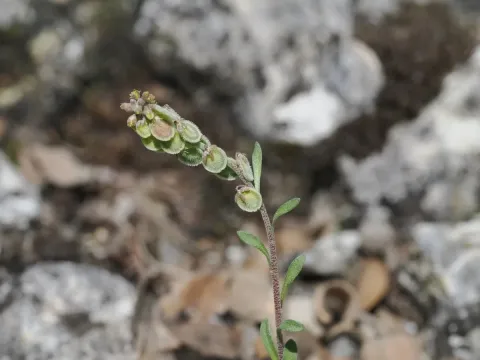
Clypeola jonthlaspi
Clypeola jonthlaspi
Clypeola jonthlaspi is a winter or spring annual belonging to the Brassicaceae family. It is typically found in open, dry environments where it completes its life cycle relatively early in the growing season.
What the section contains
Clypeola jonthlaspi
For agricultural cultivation, seeds should be sown in autumn to allow for natural stratification or in early spring. It is essential to ensure that the soil is sufficiently warmed and prepared to support the rapid development of the seedling.
The sowing depth is crucial for this small-seeded species, typically set between 1 and 2 centimeters. Shallow planting ensures that the seedlings emerge quickly, allowing them to establish a robust root system before any potential heat stress.
Standard row sowing is recommended to facilitate proper crop management and weed control. A density that balances competition for nutrients and light is vital to maximize the total biomass production of the crop.
Maintaining high-quality seeds for planting is important, as uniform germination is the primary driver of success in field environments, reducing the need for subsequent reseeding or intensive maintenance.
This species is well-adapted to environments with moderate light levels, thriving in full sun. It exhibits significant tolerance to low moisture levels and is commonly found in areas where other crops might struggle due to limited water availability.
Clypeola jonthlaspi prefers well-drained, sandy, or rocky soils. It is highly sensitive to waterlogging, so choosing a field with appropriate drainage is essential to prevent root diseases and ensure healthy growth.
Neutral to slightly alkaline soil conditions are ideal for this plant. If the soil is excessively acidic, amendments such as lime should be considered to enhance nutrient availability and general plant vigor.
While the crop can survive in nutrient-poor conditions, moderate nitrogen applications can significantly increase yield in agricultural settings. However, excessive fertilization should be avoided as it may lead to weak, prone-to-lodging plants.
Climatic requirements are relatively modest, with the plant capable of withstanding early spring temperature fluctuations. It remains resilient under varying weather patterns characteristic of its natural distribution zones.
Like many members of the Brassicaceae family, this crop is susceptible to flea beetles, especially in the early stages of development. Vigilant monitoring during the seedling phase is necessary to mitigate potential damage.
Fungal pathogens such as downy mildew or root rots can become problematic under conditions of high humidity or poor soil aeration. Implementing crop rotation practices helps reduce the buildup of soil-borne pathogens over time.
Pests like aphids may target the plants during the flowering stage, potentially impacting seed set and overall yield. Integrated pest management strategies, focusing on biological control, are preferred to maintain the health of the field.
Weed management requires careful consideration as the crop belongs to a family where selective herbicide options may be limited. Mechanical weeding or careful site selection before planting can be highly effective.
Ultimately, keeping the crop healthy through proper nutrition and balanced irrigation is the best defense against various biological threats, ensuring a successful harvest in diverse agricultural conditions.