
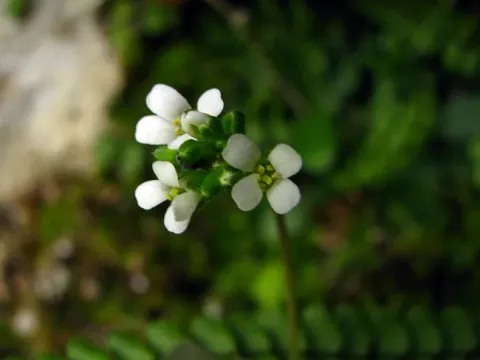
Thyme-leaved rockcress
Arabis serpillifolia
Thyme-leaved rockcress (Arabis serpillifolia) is a perennial plant belonging to the Brassicaceae family. It is a compact, mat-forming species that thrives in rugged, mountainous environments.
What the section contains
Thyme-leaved rockcress
Botanically, it features small, densely packed foliage that resembles wild thyme, creating a resilient green carpet. Its growth habit makes it an excellent choice for rock gardens and alpine-style landscaping.
The plant requires extremely well-draining soil, ideally of a sandy or stony composition. It is intolerant of heavy, clay-based soils where water tends to collect around the crown, causing physiological stress.
Full sun exposure is essential for the healthy development of this species. In shaded environments, the plant loses its dense structure and becomes leggy, which significantly reduces its ornamental value.
Regarding climate, the plant is highly cold-hardy and thrives in regions with significant temperature fluctuations. It requires minimal fertilization, as it is naturally adapted to nutrient-poor rocky soils.
Root rot is the most common threat to Thyme-leaved rockcress, usually triggered by poor drainage or overwatering. Maintaining dry conditions around the base of the plant is critical for longevity.
Powdery mildew is a frequent issue during humid periods, appearing as a whitish dust on the leaf surfaces. Good air circulation is the best preventative measure to avoid fungal infections.
Cruciferous flea beetles represent a major threat, as they feed on the small leaves, causing tiny circular holes. Regular monitoring during the spring months is necessary to detect early infestation.
Aphids can cause damage to the flowering stems during the peak of the blooming season. These pests sap the energy from the plant, potentially shortening the duration of the floral display.
Slugs and snails may target the succulent leaves during rainy weather. To prevent this, gardeners often use crushed stone or gravel as a mulch, which discourages these pests from reaching the plant foliage.