
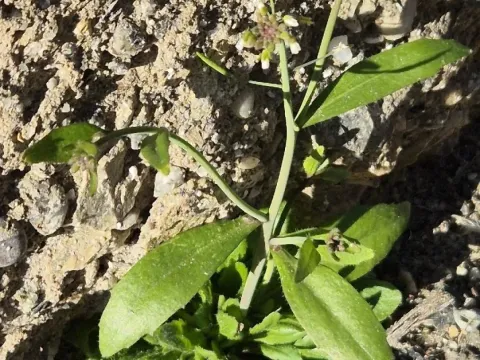
Thale cress
Arabidopsis Heynh.
Seeds of Arabidopsis thaliana are extremely small, requiring a light sowing technique on a moist, sterile substrate. The seeds should not be buried deep, as they are light-sensitive for germination.
What the section contains


Thale cress
A chilling period (stratification) at +4°C for several days is crucial to ensure high and uniform germination rates. This mimics the natural winter conditions the plant is adapted to.
Optimal germination occurs at temperatures between +20°C and +22°C. Consistent moisture must be maintained, typically using a misting system or bottom watering to avoid disrupting the tiny seeds.
Under controlled conditions, seedlings appear within 3–5 days after transfer to the growth chamber. Proper spacing is necessary to prevent competition and ensure uniform development of the plants.
The entire life cycle is exceptionally short, often completed in just 6 to 8 weeks, making it an ideal candidate for high-throughput genetic research.
As a member of the Brassicaceae family, Thale cress is a classic long-day plant. It naturally thrives in temperate regions, often colonizing disturbed soils and open fields.
The plant requires high light intensity to maximize its metabolic activity and reach maturity. Photoperiod management is critical to trigger the transition from vegetative growth to flowering.
The ideal soil substrate should be well-drained and slightly acidic to neutral. High levels of organic matter are not required, as the plant is adapted to nutrient-poor, sandy environments.
Temperature control is vital, with a preferred range of +20°C to +24°C during the day. Night-time cooling helps regulate the plant's respiration rate and prevents elongation stress.
Nutrient supply should be carefully monitored, as the plant is sensitive to salt stress. Balanced liquid fertilizers provided at low concentrations are standard practice in research environments.
Spider mites represent a major threat in indoor growth environments, as they can quickly colonize the small, dense leaves of the plant and cause significant damage.
Powdery mildew is a common fungal pathogen that strikes when air circulation is poor and humidity levels are uncontrolled, often leading to rapid tissue death.
Aphids can cause severe stunting and virus transmission. Regular inspection of the floral stems is essential to catch early infestations before they affect seed yield.
Nutrient imbalances, particularly iron deficiency, can lead to chlorosis. This is often linked to an incorrect pH level in the irrigation water or growing medium.
- Use of HEPA-filtered air in growth chambers.
- Regular monitoring for signs of stress or pests.
- Sanitation of pots and equipment to prevent cross-contamination.