
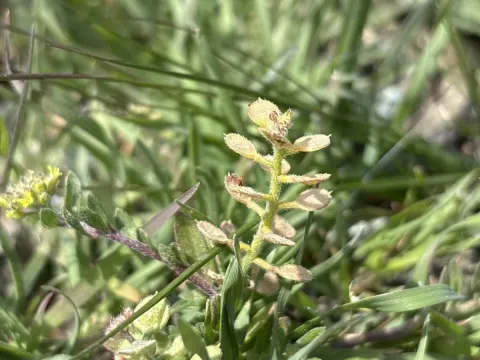
Alyssum strigosum
Alyssum strigosum
Alyssum strigosum belongs to the Brassicaceae family. It is an annual herbaceous plant native to Eurasia, widely adapted to steppe regions and arid environments.
What the section contains
Alyssum strigosum
The plant is known for its extreme drought tolerance and its ability to thrive on poor, sandy, or rocky soils. It is typically found in open areas where competition for water is high, demonstrating significant ecological plasticity.
Botanically, it is characterized by its stiff hairs covering the stems and leaves, which assist in reducing transpiration. The plant produces small, yellow flowers arranged in racemes that typically bloom in the spring.
Environmental requirements include a need for high light intensity and moderate temperature conditions for germination. The species is highly resistant to late-spring frost, which allows it to establish quickly in the early growing season.
Regarding agricultural practices, it is valued for its role in maintaining soil stability in erosion-prone areas. Its fast life cycle and prolific seed production make it a resilient species for various landscaping and land-reclamation projects.
Common threats to this species include cruciferous flea beetles, which frequently feed on young leaves. These pests are particularly aggressive in early growth stages, potentially stunting development.
Fungal diseases, such as white rust or various types of downy mildew, represent the main pathological threat. These diseases are most common in regions with high humidity or poor soil drainage.
Competition from more aggressive, invasive weed species can also threaten its survival. As a small herb, Alyssum strigosum does not tolerate heavy shading from taller, more vigorous plant competitors.
Insects such as weevils may target the developing seed heads, causing a significant reduction in natural regeneration capacity. This factor is critical for areas managed for seed collection.
Effective management strategies should focus on ensuring proper plant spacing to improve air circulation and implementing monitoring programs during the flowering and fruit-setting stages.