
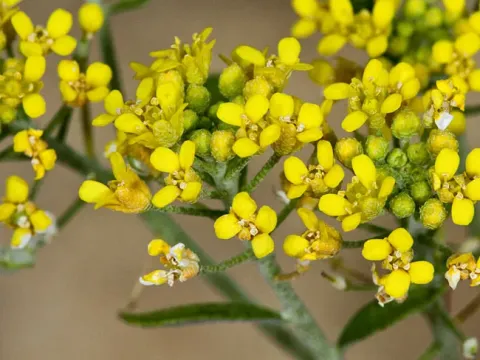
Alyssum tortuosum
Alyssum tortuosum
Sowing of Alyssum tortuosum is best performed in early spring as soon as the soil warms up to 5–8 degrees Celsius. The seeds require consistent surface moisture to trigger germination, making precise seedbed preparation essential.
What the section contains
Alyssum tortuosum
The optimal sowing depth for these seeds is 1–2 centimeters. Planting deeper can result in delayed emergence or uneven seedling establishment, which negatively impacts the final density of the stand.
Using a row sowing method with spacings of 15 to 30 centimeters is recommended. This layout provides individual plants with adequate light penetration and reduces competition for nutrients between adjacent rows.
Autumn sowing is only viable in mild climates where winter hardiness is not challenged by extreme frost. In most temperate regions, the spring cycle is the preferred time for crop establishment.
Pre-sowing treatment, such as brief seed soaking, helps in achieving faster and more uniform seedling emergence. This gives the crop a competitive advantage in early growth stages against weed pressure.
Alyssum tortuosum belongs to the Brassicaceae family and is a characteristic xerophyte. It demonstrates exceptional resilience to prolonged dry spells and high atmospheric temperatures during the summer months.
The crop thrives in light, well-drained sandy or loamy soils with a neutral to slightly alkaline pH. Excessive moisture and waterlogged soils are detrimental to the root collar and plant longevity.
As a sun-loving species, Alyssum tortuosum requires open, unshaded sites for successful industrial cultivation. Any form of shading significantly inhibits growth and reduces overall reproductive vigor.
While the plant is relatively undemanding regarding soil fertility, it responds positively to basic mineral fertilization, particularly on depleted soils, which improves overall plant vigor.
The natural habitat of this species in mountainous and foothills regions has led to high adaptability to fluctuations between day and night temperatures, ensuring stable development in varied conditions.
The primary economic value of Alyssum tortuosum lies in its high nectar production. It serves as an excellent bee forage, attracting various pollinators throughout the peak flowering season.
The vegetative mass can serve as a supplementary component in livestock feed mixes, although it is not considered a primary fodder crop. Integration into diversified cropping systems is highly recommended.
Seed yield is largely dependent on the success of insect pollination. Under favorable conditions with high pollinator activity, yields can reach 3–5 centners per hectare.
The plant has a strong capacity for regeneration after partial harvesting or cutting, which is often utilized by growers to extend the flowering duration for improved honey production.
Overall yield performance varies based on climatic region and the intensity of agricultural management, including weed control and the maintenance of optimal soil moisture levels during spring.
Like many Brassicaceae members, Alyssum tortuosum is susceptible to flea beetles. These pests are most destructive during the early seedling stage, requiring vigilant monitoring and proactive protection.
High humidity conditions may facilitate fungal diseases such as downy mildew. Maintaining appropriate plant density and following a strict crop rotation schedule are the best preventive measures.
Aphids can infest flower stalks, affecting nectar quality and seed development. Pest control measures must prioritize environmentally friendly methods to ensure the safety of bees and other beneficial insects.
Wireworms can damage the root system of young plants, leading to gaps in the field. Deep autumn plowing is an effective cultural practice to reduce the population of these soil-dwelling pests.
Integrated Pest Management (IPM) strategies allow for the effective protection of the crop, balancing the need for pest control with the sustainable maintenance of the farm's ecological health.