
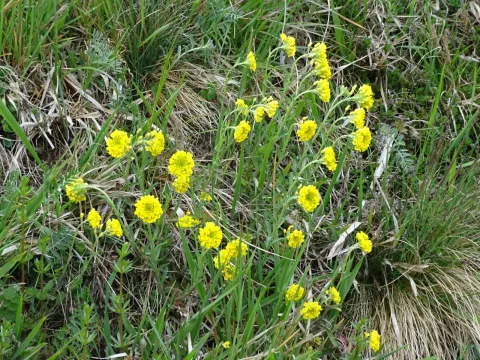
Alyssum repens
Alyssum repens
Alyssum repens, a member of the Brassicaceae family, is a resilient perennial often used as ground cover. Sowing in open ground should occur in early spring once the soil temperature is stable.
What the section contains
Alyssum repens
The seeds are tiny and require shallow sowing, barely covered by a fine layer of substrate or sand. Light exposure is crucial for uniform germination of this species.
For indoor propagation, seeds are sown in seed trays during late winter. Maintaining a constant temperature ensures consistent sprout development before the final transplantation.
Transplanting to the permanent site is best performed after the last spring frost. Spacing the plants 25–30 cm apart encourages healthy growth and prevents overcrowding.
Autumn sowing is also possible in milder climates, allowing the seeds to undergo natural stratification, which often results in more vigorous spring growth.
Alyssum repens is a heliophyte, meaning it thrives in full sun. Adequate solar exposure is essential for maintaining its compact habit and promoting profuse flowering.
Soil requirements are relatively simple: the plant needs well-drained, porous soil. Heavy or clay-based soils that retain moisture can cause root rot and are unsuitable for this species.
The plant is highly drought-tolerant, making it an excellent choice for rock gardens or slopes where water availability is limited and soil may be thin.
Fertilization should be handled carefully. Excessive nutrients often lead to lush foliage growth rather than the desired flower density, so a light application of balanced minerals is preferred.
It is winter-hardy and generally withstands low temperatures well without needing special winter protection, making it a reliable choice for cold climates.
The most significant threat to Alyssum repens is poor drainage. Excess humidity increases the risk of fungal infections such as powdery mildew and various types of root rot.
Pests like crucifer flea beetles are common in early stages of development. Regular scouting is recommended to prevent significant leaf damage caused by these insects.
Aphids may occasionally infest the plant, particularly during the flowering season. If left untreated, they can weaken the plant and reduce its aesthetic appeal.
Proper spacing is the best preventative measure against most pathogens. Improving air circulation around the canopy significantly reduces the occurrence of fungal outbreaks.
If chemical intervention is necessary, use fungicides and insecticides according to the manufacturer's instructions, focusing on the affected areas of the plant.
Alyssum repens is primarily grown for ornamental purposes, such as landscaping, rockeries, and erosion control on embankments due to its dense root system.
Seed collection should be done when the pods turn brown and dry. Careful handling is required to avoid seed scattering as the pods dehisce naturally.
Deadheading spent flowers is a key maintenance practice. It helps improve the appearance of the plant and encourages a second flush of blossoms later in the season.
For large-scale multiplication, vegetative propagation via cuttings in the summer is highly effective and ensures the preservation of the plant's specific traits.
As a low-maintenance species, it is highly favored in urban greening projects, requiring minimal intervention once established in an appropriate environment.