
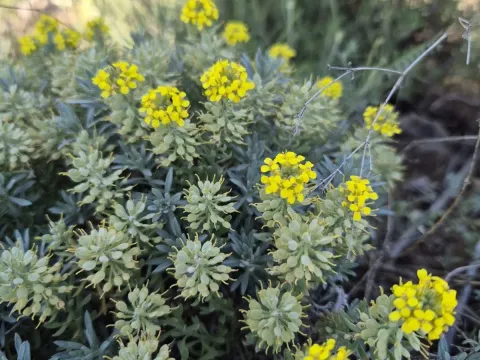
Alyssum pulvinare
Alyssum pulvinare
Alyssum pulvinare is a perennial herbaceous plant belonging to the Brassicaceae family. It is known for its distinctive cushion-like growth habit, making it an excellent choice for rock gardens and borders where compact, evergreen-like foliage is desired.
What the section contains
Alyssum pulvinare
The plant originates from mountainous regions, which dictates its preference for well-drained, gritty soils. It requires full sunlight to maintain its structural integrity; in insufficient light, the plant tends to become leggy and loses its characteristic dense shape.
Regarding soil requirements, it thrives in neutral to alkaline, nutrient-poor substrates. Excellent drainage is non-negotiable, as the plant is highly susceptible to root rot caused by standing water or excessive moisture during the winter months.
Climatically, it is well-adapted to cooler temperatures and requires moderate water. During the heat of summer, it is essential to ensure that the air circulation around the cushions remains high to prevent internal fungal growth within the dense foliage.
Botanically, the plant features small, lanceolate leaves covered in fine hairs that give the plant a silvery-grey appearance. During the flowering stage, it produces masses of small, vibrant yellow flowers that emit a sweet, honey-like scent.
The primary threats to Alyssum pulvinare are fungal diseases associated with excessive soil moisture and poor ventilation. Root rot and powdery mildew are the most common issues that can rapidly compromise the health of the cushions.
Insect pests such as flea beetles represent a significant threat during the early growth stages, as they feed on the succulent leaves. Aphids may also appear during warmer periods, weakening the plant by sap-sucking activity.
Pest management involves regular monitoring and the application of appropriate contact insecticides when necessary. Maintaining a clean garden environment by removing weeds prevents the buildup of pest populations around the alpine beds.
Fungal prevention is largely achieved through cultural practices. Ensuring the base of the plant is surrounded by gravel or grit helps keep the foliage dry and improves drainage, which is critical for long-term survival.
Should severe infections occur, systemic fungicides should be applied according to the label instructions. Maintaining an open, airy planting site is the most effective natural defense against the range of pathogens that target this species.