
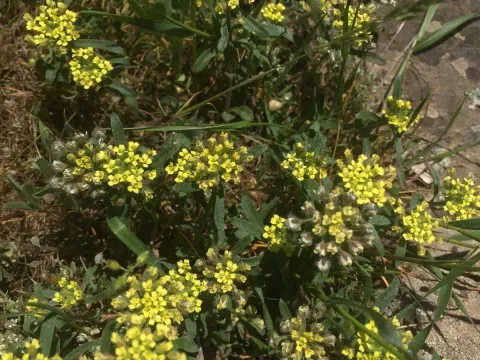
Alyssum umbellatum
Alyssum umbellatum
Alyssum umbellatum, commonly known as umbrella alyssum, is a member of the Brassicaceae family. While often viewed for its ornamental value, it is gaining recognition in agricultural contexts as an excellent cover crop and a significant nectar source for pollinators.
What the section contains
Alyssum umbellatum
The optimal sowing time is during the early spring once soil temperatures reach 10–12°C. In regions with milder climates, late autumn sowing is feasible, allowing the seeds to germinate early in the spring as soon as conditions become favorable.
Sowing should be performed in rows spaced approximately 25–30 cm apart. Given the small size of the seeds, it is essential to prepare a fine seedbed and ensure shallow planting depth, typically not exceeding 1 cm, to facilitate proper emergence.
Seedling establishment requires careful management of weeds. During the initial growth phase, competition from weeds can significantly hinder the plant's development, necessitating manual or mechanical intervention to keep rows clean.
Thinning is an essential practice to optimize individual plant spacing, typically around 10–15 cm between plants. This density promotes bushier growth and enhances the overall floral output, which is crucial for maximizing its benefits in agricultural landscapes.
This species thrives in full sun, requiring exposure to direct sunlight for the majority of the day. Reduced light levels often result in leggy growth, diminished flower production, and lower nectar secretion rates.
The ideal soil for this crop must be well-draining, as the plant is highly sensitive to waterlogging. It prefers soils with a neutral to slightly alkaline reaction, and liming may be necessary if the soil is found to be acidic.
Alyssum umbellatum is known for its remarkable drought tolerance once established. Its deep root system allows it to survive extended periods without rainfall, making it a robust candidate for areas with limited water resources.
Temperature resilience is a key feature of this plant. It is capable of enduring moderate spring frost and can withstand the intense heat of summer, provided it has access to some moisture during the germination phase.
For large-scale cultivation, ensuring the soil has adequate calcium levels is recommended. This mineral support enhances the plant's structural integrity and its resilience against various physiological disorders during the flowering season.
The primary disease threat is powdery mildew, which often develops in conditions of high humidity or poor air circulation within the field. Maintaining proper row spacing is the best preventative strategy against this fungal pathogen.
Root rot is a major risk on poorly drained soils or in areas where excessive rainfall occurs. To mitigate this risk, it is advised to avoid low-lying plots and to prioritize fields with excellent natural soil percolation.
Crucifer flea beetles represent the most significant pest risk, especially during the seedling stage. These insects can quickly defoliate young plants, making vigilant monitoring and timely insecticidal applications vital for crop survival.
Aphid infestations can occasionally occur, particularly during the peak flowering period. These pests extract sap from the developing buds, which can lead to stunted growth and reduced attractiveness to beneficial pollinators.
Implementing a sound crop rotation plan, avoiding the replanting of Alyssum umbellatum on the same plot for at least three seasons, helps to minimize the buildup of soil-borne pathogens and long-term pest pressure.