
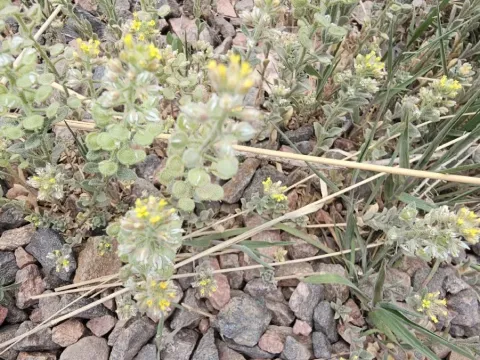
Alyssum simplex
Alyssum simplex
Alyssum simplex is an annual herbaceous plant belonging to the Brassicaceae family. In agricultural settings, sowing is performed in early spring as soon as the soil warms up to 5-8 degrees Celsius.
What the section contains
Alyssum simplex
The tiny seeds require shallow sowing, no deeper than 0.5–1 cm, to ensure optimal germination. An ideal stand density is achieved with row spacing of 15–20 cm.
The plant exhibits high germination energy, allowing it to establish quickly and suppress weed growth in the early stages of vegetation.
For uniform stand establishment, both solid row sowing and strip sowing methods are practiced, adapted to the machinery available on the farm.
The culture is characterized by its ability to self-seed under favorable weather conditions, which should be considered when planning crop rotations for subsequent seasons.
Alyssum simplex is an undemanding crop known for its high drought tolerance and adaptation to poor soils. It thrives best in well-drained, light sandy loam or loamy soils with a neutral pH.
Despite its high tolerance to moisture deficits, profuse flowering and maximum nectar productivity are observed when there is sufficient rainfall during the budding phase.
The plant is light-loving; therefore, commercial cultivation requires open, sunny areas that exclude shading from trees or larger shrubs.
The crop tolerates temperature drops well, allowing it to be cultivated in regions with unstable spring weather without the risk of crop loss from light frosts.
An important development factor is the absence of stagnant groundwater, as excessive moisture leads to the suppression of the root system and the development of rot.
The primary use of Alyssum simplex is the creation of a forage base for bees, where the crop is valued as a productive honey plant.
Honey productivity per hectare of crops directly depends on plant density, light availability, and the general soil fertility of the field.
The economic value of the plant also lies in its ability to act as a cover crop that prevents erosion and improves the structure of the topsoil layer.
The green mass of Alyssum contains valuable micronutrients and can be used as a natural green manure, enriching the soil with organic matter after incorporation.
Maximum biomass yield is achieved during the mass flowering period, which is the most critical time to assess the productivity of the crops for beekeeping purposes.
Common enemies of the crop include flea beetles, which can cause significant damage to young seedlings during hot and dry weather conditions.
In high humidity conditions, fungal infections such as Alternaria leaf spot may develop, manifesting as patches on the foliage.
Improper agronomy and prolonged rains can trigger the appearance of downy mildew, which requires prophylactic measures such as thinning the crops.
Among the pests, the rape blossom beetle is also notable; during mass infestations, it can destroy buds and significantly reduce the honey-producing potential of the field.
To control diseases and pests, it is recommended to implement crop rotation to break the pathogen cycle and use biological products safe for pollinating insects.
Harvesting for seeds is conducted in the pod-browning phase, when the majority of the seed material reaches waxy ripeness.
To prevent seed shattering, a two-stage harvesting method is applied, which includes mowing into windrows followed by threshing after the biomass dries.
When using the plant as a honey source, the nectar collection period is extended, so it is important to ensure bee access to the field throughout the flowering period.
It is important to control seed moisture during post-harvest processing to exclude mold and loss of germination viability during long-term storage.
After harvesting the seeds, the remaining plant residues are incorporated into the soil as green fertilizer, promoting increased biological activity.