
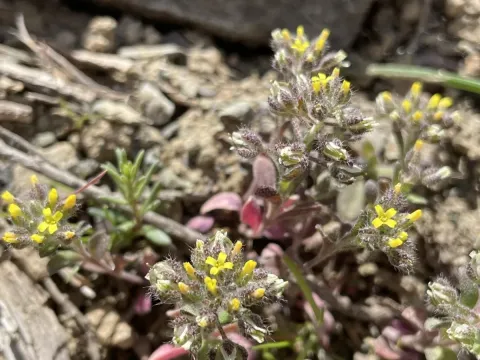
Alyssum minutum
Alyssum minutum
Alyssum minutum, commonly known as small alyssum, is an annual herbaceous plant belonging to the Brassicaceae family. It is recognized for its rapid growth cycle, which allows it to establish itself efficiently in varied environmental conditions.
What the section contains
Alyssum minutum
Sowing typically takes place in early spring once the soil temperature is adequate for germination. Because the seeds are tiny, surface sowing or shallow planting at a depth of less than 1 cm is crucial for success.
Proper soil preparation, including leveling and removing large clods, ensures consistent seed-to-soil contact. This preparation is fundamental for uniform emergence across the entire planting area.
Farmers often utilize precise seeding rates to achieve optimal density. Due to the rapid development of the plant, managing the sowing density helps in controlling the total biomass yield for agricultural purposes.
Sequential sowing at intervals of two weeks is a common practice when the crop is managed as part of a forage or nectar-producing sequence, ensuring a sustained supply for beneficial insects.
This crop thrives in full sun exposure. It is highly intolerant of shade, as even partial light reduction can significantly inhibit vegetative growth and the subsequent reproductive phase of the plant.
Small alyssum is well-adapted to poor-quality soils, including rocky, sandy, and calcareous substrates. Its ability to extract nutrients from low-fertility soils makes it a resilient choice for challenging land.
The species is a classic xerophyte, demonstrating remarkable drought tolerance. It excels in environments where water availability is limited, making it suitable for arid or semi-arid agricultural regions.
An ideal pH range for this plant is between 6.5 and 8.0. It performs optimally in alkaline soils and is generally not responsive to high nitrogen inputs, which can often lead to excessive leaf growth rather than desired flowering.
Maintaining proper spacing is key to its health. Good airflow prevents the accumulation of humidity near the ground, which is essential given the plant's sensitivity to waterlogged conditions and subsequent fungal growth.
The most prominent pests for this member of the Brassicaceae family are flea beetles. These insects can cause significant damage to young seedlings, making early monitoring and protection vital for field establishment.
Fungal issues, such as powdery mildew, often arise during periods of high humidity. The white, powdery appearance on the leaves is a clear indicator that the plant is undergoing environmental stress or poor air circulation.
Root rot, driven by stagnant water or poor drainage, represents a major threat to crop productivity. Preventing water accumulation in the root zone is the most effective way to mitigate this risk.
- Regular field inspections for pest presence.
- Maintaining optimal planting density to improve ventilation.
- Rotating crops to prevent the buildup of soil-borne pathogens.
Implementing an integrated pest management strategy that focuses on prevention rather than chemical intervention is recommended to preserve the quality and sustainability of the crop.