
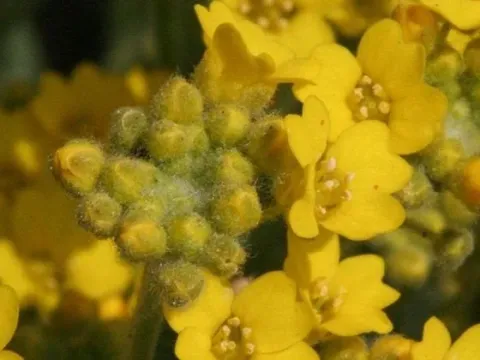
Alyssum handelii
Alyssum handelii
Alyssum handelii is typically sown in early spring when soil temperatures reach 10-12 degrees Celsius. For faster establishment, greenhouse sowing at the end of March is recommended to produce healthy transplants.
What the section contains
Alyssum handelii
When direct seeding, scatter the seeds over the soil surface and cover lightly with sand or fine substrate. Since the seeds require light to germinate, covering them too deeply will significantly inhibit emergence.
Maintaining consistent soil moisture during the first two weeks is crucial for uniform germination. Once established, plants should be thinned to a spacing of 20-25 centimeters to allow for optimal airflow and root expansion.
The seeds show high germination rates in well-aerated soil media. Proper drainage is essential during the early stage to ensure the roots do not rot before the plant establishes itself in the soil profile.
Selecting the right sowing window is critical to help the plants establish a robust root system before the onset of extreme summer heat, ensuring better longevity throughout the season.
Alyssum handelii, a member of the Brassicaceae family, is a xerophytic plant that thrives in high-light conditions. It is essential to plant it in areas that receive full sun for the majority of the day.
The ideal growing medium consists of well-drained, sandy, or rocky soils with a neutral to slightly alkaline pH. Excess moisture and waterlogged conditions must be avoided to prevent plant decline.
This crop is highly drought-tolerant, making it well-suited for arid or rocky environments where other vegetation might struggle. While it adapts to dry conditions, occasional watering during extreme drought can enhance blooming.
The plant performs best under moderate temperatures with good air circulation. It is specifically adapted to environments with high daytime temperatures and significant diurnal shifts, typical of its native habitats.
Adding calcium to the soil is highly beneficial, especially in acidic environments. Proper nutrient management ensures compact growth and promotes more vibrant and prolific flowering throughout the growing season.
Root rot is the most significant disease threat to Alyssum handelii, typically occurring in conditions of poor drainage or over-irrigation. Maintaining a dry soil surface is the best preventative strategy.
Crucifer flea beetles are common pests that cause damage to foliage during the early stages of growth. Monitoring is essential, and systemic insecticides can be applied if infestation levels become damaging.
Powdery mildew may affect the plant during late summer if humidity levels rise without adequate air movement. Regular cleaning of debris and ensuring plant spacing can mitigate the risk of fungal spread.
Aphids can colonize buds and tender tips, extracting plant sap and weakening the overall vigor of the crop. Biopesticides or targeted soaps are effective tools for managing these insect populations.
Snails and slugs can damage seedlings and leaves during damp weather. Utilizing gravel mulching around the base of the plant acts as a physical barrier and helps to deter these soft-bodied pests.