
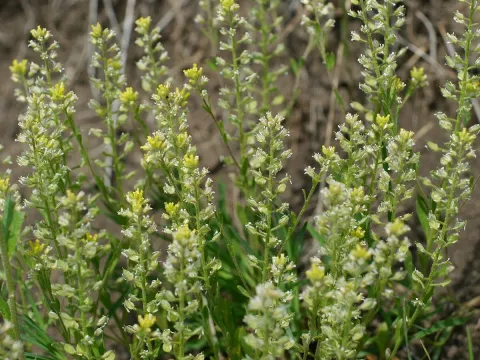
Alyssum hirsutum
Alyssum hirsutum
Alyssum hirsutum is an annual herbaceous plant belonging to the Brassicaceae family. In agricultural settings, the most effective sowing window occurs in early spring, allowing the plant to leverage residual soil moisture for uniform germination.
What the section contains
Alyssum hirsutum
Due to the small size of the seeds, they should be sown at a shallow depth of approximately 0.5–1 cm. Precision drilling ensures that seeds remain in close contact with moist soil particles, which is vital for rapid and stable emergence.
Proper plant spacing is essential; excessive density can lead to inadequate air circulation, creating a microclimate that favors the development of pathogens within the crop canopy.
For regions with warmer winters, late autumn sowing is a viable strategy, as the seeds undergo natural stratification and emerge early in the spring as soon as temperatures allow.
Agricultural managers should ensure that the seedbed is finely prepared and leveled to prevent uneven burial of seeds, which is a common cause of poor establishment in small-seeded crops.
This crop is highly valued for its ecological resilience, particularly its ability to thrive in poor, sandy, or well-drained soils where more demanding crops might fail.
High light intensity is the primary requirement for successful growth. Alyssum hirsutum is strictly heliophilic and should be planted in open areas to ensure vigorous development and maximum flower production.
Its outstanding drought tolerance allows the plant to sustain metabolic activity during extended dry periods, making it an excellent choice for low-input agricultural systems in arid zones.
While the plant is not overly demanding regarding fertility, supplemental application of phosphorus and potassium can significantly enhance root system architecture and flowering longevity.
Good soil drainage is non-negotiable; the root system is highly sensitive to hypoxia caused by waterlogging, which often leads to rapid decay and plant collapse during the growing season.
Crucifer flea beetles represent the most significant threat to young plants, often causing rapid defoliation that can destroy a crop stand during the seedling stage if left untreated.
In environments with poor ventilation and high humidity, powdery mildew can become a major concern, manifesting as a white fungal layer that inhibits photosynthesis.
Aphid infestations are also common, particularly during the flowering phase. These pests feed on phloem sap, which can significantly reduce the overall vitality and pollination potential of the crop.
Integrated pest management strategies should focus on crop rotation and the elimination of wild Brassicaceae species from the field borders to reduce pest reservoirs.
When chemical intervention is required, the use of selective insecticides is recommended to manage pest populations while preserving beneficial pollinating insects that frequently visit the field.