
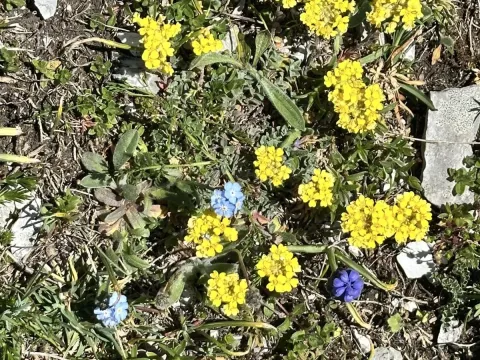
Alyssum diffusum
Alyssum diffusum
Alyssum diffusum, a member of the Brassicaceae family, is typically propagated via seeds. In temperate climates, direct sowing is performed in mid-spring once the soil has warmed sufficiently.
What the section contains
Alyssum diffusum
For earlier flowering, seeds can be started indoors in trays during late winter. It is crucial to press the seeds onto the soil surface rather than burying them, as light is required for germination.
Seedlings should be spaced approximately 25–30 cm apart to ensure adequate air circulation and to prevent the development of localized pathogens.
The germination period usually lasts between one to two weeks, depending on ambient temperatures and the moisture content of the growing medium.
This species is well-known for its naturalizing ability, often producing a reliable stand from self-sown seeds if the environmental conditions remain stable throughout the season.
This plant thrives in full sun, which is essential for maintaining a compact growth habit and promoting a dense profusion of blossoms throughout the season.
The species is highly adaptable to various soil types but demonstrates optimal performance in well-drained, sandy, or rocky soils with neutral to slightly alkaline pH levels.
It is remarkably drought-tolerant, making it an excellent choice for xeriscaping or areas where supplemental irrigation is limited or unavailable.
Protection from waterlogged conditions is critical; soil drainage must be prioritized to avoid root-related stress or decay during prolonged wet weather.
The plant demonstrates good resilience against fluctuating temperatures, allowing it to maintain its structural integrity throughout early spring and late autumn.
The primary agricultural utility of Alyssum diffusum lies in its high nectar production, making it a valuable resource for pollinator support and honey production.
In ornamental horticulture, the output is measured by the duration and intensity of the bloom cycle, which can be extended through regular deadheading of spent flowers.
The plant's extensive root system and dense foliage provide excellent soil-binding properties, which are utilized for erosion control on slopes and embankments.
Biomass production is steady, and the plant remains visually appealing even during mid-summer heatwaves, providing consistent coverage in landscape designs.
Seed harvesting should occur just before full maturation to prevent excessive seed shattering, ensuring higher recovery rates during the collection process.
Cruciferous flea beetles are the most significant pest, particularly affecting younger plants during warm, dry periods when foliage growth is most vulnerable.
Powdery mildew can emerge in conditions of high humidity and poor airflow, necessitating the removal of affected parts and improved spacing between plants.
Root rot is a common issue primarily resulting from poor drainage or over-irrigation, emphasizing the importance of site selection and soil texture analysis.
Aphid infestations may occur on the succulent new growth during the pre-flowering stage, requiring monitoring and potential application of targeted insecticidal treatments.
To reduce disease pressure, it is recommended to avoid planting in areas where other Brassicaceae crops have been cultivated within the previous three years.