
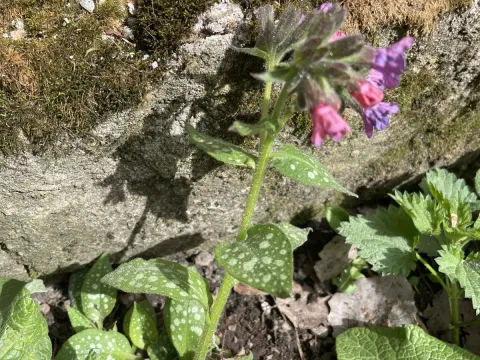
Pulmonaria affinis
Pulmonaria affinis
Pulmonaria affinis, commonly known as a species of lungwort, belongs to the Boraginaceae family. It is a herbaceous perennial native to Western Europe, specifically regions in France, where it thrives in cool and shaded forest habitats.
What the section contains
Pulmonaria affinis
The plant is highly regarded for its shade tolerance and ornamental foliage, which often features distinct silvery spotting. It prefers woodland conditions with dappled sunlight, making it an excellent choice for north-facing borders or understory garden areas.
Regarding soil requirements, this species needs humus-rich, moist, and well-drained soil to thrive. It performs best in neutral to slightly acidic pH conditions and benefits significantly from the addition of organic compost during the spring growing season.
Cultivation practices involve maintaining consistent soil moisture, especially during the flowering stage. Since the plant is sensitive to drought, providing adequate irrigation during dry spells is crucial for sustaining the health and vigor of the clumps.
From an agricultural and horticultural perspective, Pulmonaria affinis is utilized for its landscape potential as a ground cover and for its historical significance as an herbal remedy in traditional medicine due to its soothing properties.
The primary disease affecting this species is powdery mildew, particularly when plants are grown in overcrowded conditions with poor airflow. Improving ventilation and maintaining stable soil moisture levels are effective preventative measures.
Pests such as slugs and snails are the most common threats to the foliage of Pulmonaria affinis. During wet seasons, these mollusks can cause significant leaf damage, necessitating the use of organic deterrents or barrier methods.