
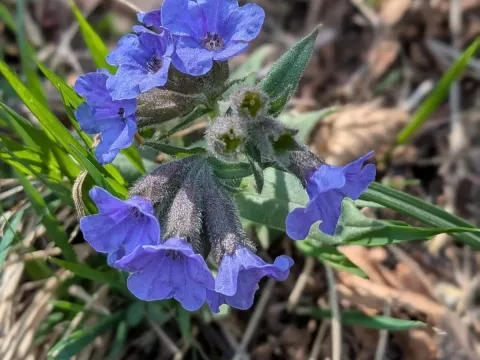
Pulmonaria australis
Pulmonaria australis
Pulmonaria australis belongs to the Boraginaceae family and is recognized as a hardy perennial herb suitable for cultivation in various agricultural and medicinal contexts.
What the section contains
Pulmonaria australis
Propagation is most effective through seeds sown in late autumn, which allows for natural vernalization, a process essential for breaking dormancy and improving spring germination rates.
If spring sowing is required, seeds must be subjected to artificial stratification in cold, damp conditions for at least four to six weeks prior to planting.
The seeds should be sown at a shallow depth of approximately 1 centimeter in well-prepared seedbeds to ensure consistent moisture and aeration.
When propagating by division, the mature clumps should be separated in early spring before active growth begins to minimize transplant shock and encourage rapid establishment.
Pulmonaria australis thrives in partial shade, mimicking its natural woodland habitat where protection from intense direct sunlight is vital for leaf health.
Soil requirements include high organic content, good drainage, and a slightly acidic to neutral pH level, which promotes optimal nutrient uptake.
Consistent soil moisture is crucial for this crop, particularly during the initial development phases; however, waterlogging must be avoided to prevent root diseases.
The plant performs best in regions with mild summers and cool winters, demonstrating strong resilience to temperate climate fluctuations.
Supplemental irrigation may be necessary during prolonged dry spells, as water stress can lead to stunted growth and premature yellowing of the foliage.
The primary agricultural output includes medicinal leaf biomass and early-season nectar production for apiary purposes.
Yields are maximized by maintaining optimal spacing of approximately 40 centimeters between plants, which allows for canopy development and air circulation.
For medicinal leaf harvesting, the plant should be cultivated in intensive blocks where nutrient levels are maintained through regular application of organic matter.
As an early bloomer, Pulmonaria australis provides an essential food source for pollinators, contributing to the overall biodiversity of the agricultural farm.
With correct management, the perennial crop provides reliable yearly yields, requiring only minimal soil rejuvenation every few growing seasons.
Powdery mildew is the most common fungal issue, appearing as a white dusting on leaves, often triggered by high humidity and poor airflow around the foliage.
Slugs and snails can cause significant damage to young leaves, requiring the implementation of barriers or eco-friendly deterrents during the spring season.
Root rot, driven by stagnant water or compacted soil, can jeopardize the entire plantation; thus, effective drainage is the best preventative strategy.
Integrated Pest Management (IPM) practices, including the removal of infected debris and regular monitoring, are recommended to maintain plant health without harsh chemicals.
Healthy plants are generally robust, but overcrowding should be avoided to prevent the buildup of pathogens within the crop canopy.
Harvesting for commercial use should take place during the full bloom phase, ensuring the leaves contain the highest concentration of phytochemicals.
The harvest method involves clean cutting of stems, leaving enough foliage to sustain the plant’s photosynthesis process and future growth.
Post-harvest processing requires immediate drying in dark, well-ventilated rooms to prevent the leaves from losing their potency and color profile.
The dried material must be stored in cool, dry conditions, away from direct light and humidity, to ensure its longevity and market quality.
Quality control at the harvest stage is essential, ensuring that the harvested batch is free from soil, weeds, and other undesirable contaminants.