
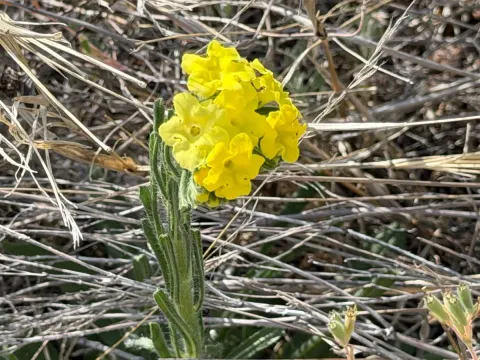
Lithospermum cobrense
Lithospermum cobrense
Lithospermum cobrense, belonging to the Boraginaceae family, is a perennial herb known for its resilience. It naturally inhabits arid and semi-arid regions of North America, where it thrives in challenging environmental conditions.
What the section contains
Lithospermum cobrense
The plant is categorized as a xerophyte, meaning it is well-adapted to environments with limited water supply. It prefers gravelly or rocky soils that provide excellent drainage, ensuring that its root system remains protected from prolonged saturation.
Cultivation requires full sun exposure. In shaded environments, the plant struggles to develop its characteristic structure and may lose its vigor. High light intensity is crucial for the metabolic processes that support its slow but steady growth rate.
The soil pH should ideally be neutral or slightly alkaline. Unlike many intensive crops, Lithospermum cobrense does not require highly fertile soil; in fact, overly rich soil can negatively affect its physiological balance and decrease its adaptability.
Temperature tolerance is a key trait, as the species is adapted to significant diurnal temperature fluctuations. It possesses a deep root system that allows it to access sub-surface moisture, which is vital for survival during the hot summer months.
Root rot and crown rot represent the primary pathological risks for this crop. These diseases are almost exclusively linked to poor soil management, particularly the inability of the soil to drain excess water away from the root collar.
Insect pests such as aphids can affect young leaf growth, especially when the plant is under stress. Management should focus on maintaining overall plant health to ensure that the species can resist minor infestations naturally.
Weed competition is a significant concern during the initial planting phase. As a relatively slow-growing species, it can be easily overwhelmed by faster-growing weeds, necessitating manual or mechanical clearing of the surrounding area.
Pathogen spread is often exacerbated by poor air circulation. Planting density should be carefully calculated to ensure that each individual plant has sufficient space, reducing the micro-humidity that pathogens prefer.
Integrated Pest Management (IPM) practices are recommended for this crop. By minimizing chemical intervention and focusing on preventative cultural practices, producers can maintain a stable and healthy population of Lithospermum cobrense.