
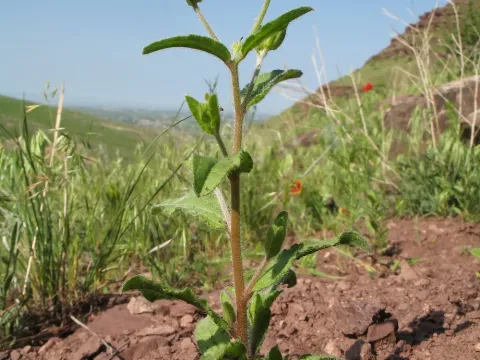
Lappula sinaica
Lappula sinaica
Lappula sinaica is an annual herbaceous plant classified within the Boraginaceae family, known for its significant adaptability to arid environments.
What the section contains
Lappula sinaica
Originating from the desert regions of the Sinai Peninsula and surrounding areas, this plant is well-evolved for extreme heat and moisture scarcity.
The plant thrives in well-drained, sandy, or rocky soil profiles where competition from other vegetation is typically minimal during the early growth stages.
From a biological standpoint, it is a pioneer species capable of colonizing disturbed habitats due to its efficient seed dispersal mechanism.
Cultivation requirements are generally focused on high solar radiation and low soil moisture capacity, as it does not tolerate waterlogged conditions.
The primary concern regarding this species in an agricultural context is its status as a persistent weed that invades arable land and pasture areas.
The seed capsules are equipped with hooked prickles, facilitating transport by attachment to livestock fur or agricultural machinery, leading to rapid spread.
Pathogenic threats include various fungal infections, such as mildew, which may occur if high humidity persists in dense populations of the plant.
Insect pests commonly found on Boraginaceae members can utilize this plant as a host, potentially serving as a bridge to infiltrate nearby commercial crops.
Integrated pest management strategies are recommended, focusing on the early mechanical removal of plants before they reach the fruit-setting stage.