
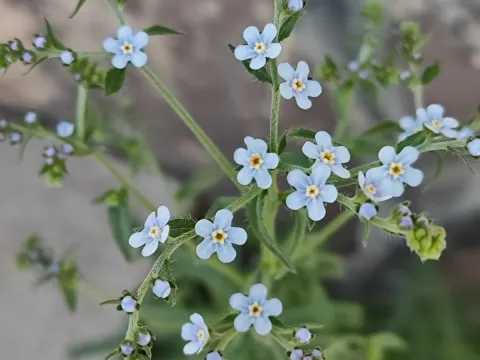
Lappula barbata
Lappula barbata
Lappula barbata, commonly known as a type of burrweed, is an annual herbaceous plant belonging to the Boraginaceae family. It is recognized as a hardy species capable of establishing itself in various disturbed habitats and agricultural lands.
What the section contains
Lappula barbata
The plant thrives in well-drained soils and exhibits remarkable tolerance to nutrient-poor substrates. Its ability to withstand arid conditions is supported by a deep taproot system, which helps it survive in water-limited environments.
It prefers sunny, open environments where it faces minimal competition for light. Due to its physiological adaptations, Lappula barbata can persist in regions with high temperature fluctuations, common in steppe zones.
Morphologically, the plant displays a branched stem covered in trichomes (hairs) that serve to reduce transpiration. This adaptation is crucial for maintaining water balance during hot, dry summer months.
Reproduction is highly efficient, relying on small nutlets equipped with hooked bristles. These structures facilitate dispersal through animal fur or human clothing, allowing the plant to spread rapidly across grazing pastures and crop fields.
From an agronomic perspective, Lappula barbata acts as a nuisance weed. It competes with cereal crops and fodder grasses for limited soil nutrients, potentially reducing total crop yields in infested areas.
The plant is exceptionally resistant to common pests and diseases, which makes it a persistent presence in the field. Lack of natural enemies means it can dominate areas if left unchecked by human intervention.
The most significant negative impact on livestock farming is the fouling of sheep wool by the spiny fruit. This significantly degrades the value of the wool and can cause irritation or physical harm to grazing livestock.
Control strategies primarily involve mechanical tillage, such as harrowing and plowing, to eliminate young plants before they produce seeds. Preventing seed set is critical to reducing the soil seed bank.
Chemical control can be implemented using selective herbicides during the rosette growth stage. Agronomists recommend monitoring field margins and ensuring high-quality seed cleaning to prevent the spread of the weed into production crops.