
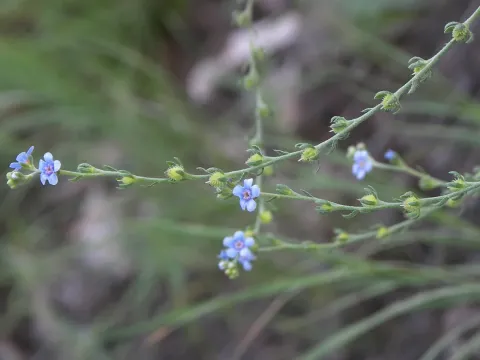
Lappula heteracantha
Lappula heteracantha
Lappula heteracantha, commonly known in its native range as a type of stickseed, is an annual plant belonging to the Boraginaceae family. In agronomic practice, it is recognized as a problematic weed that interferes with the development of commercial crops.
What the section contains
Lappula heteracantha
The plant originates from the steppe regions of Eurasia and is widely distributed across areas characterized by continental climate patterns. It thrives in open habitats, showing high adaptability to varying levels of precipitation and solar radiation.
Morphologically, the plant is distinguished by its branched stem and small blue flowers. Its key biological feature is the fruit, which possesses specialized prickles designed for dispersal via the fur of animals, a process known as epizoochory.
It prefers well-drained, sandy, or light-textured soils. Due to its physiological plasticity, Lappula heteracantha can successfully establish itself in disturbed environments, including abandoned fields and neglected agricultural edges.
Good agricultural practices for management include rigorous seedbed preparation. Since the seeds can remain dormant for several years, a multi-year strategy involving both chemical control and mechanical cultivation is required to deplete the soil seed bank.
The weed acts as a significant competitor, exhausting soil nitrogen and water reserves. When infestation density is high, it causes substantial economic loss by reducing the growth rates and final yield of cereal crops.
The hairy surface of the plant provides a natural defense against many generalist insect pests, making it difficult to control through biological agents alone. However, it may attract generalist pests that later migrate to crops.
Pathogen accumulation is a major threat. As a member of the Boraginaceae family, it can harbor viral or fungal pathogens that are detrimental to other cultivated species in the rotation, necessitating clean field management.
Chemical control involving selective herbicides is the primary method of mitigation. Applying treatments during the rosette stage of the weed is crucial for preventing seed production and long-term population spikes.
Cultural methods are equally important. Utilizing competitive crops that create dense canopies helps in suppressing the growth of Lappula heteracantha by limiting the light availability required for its germination and seedling development.