
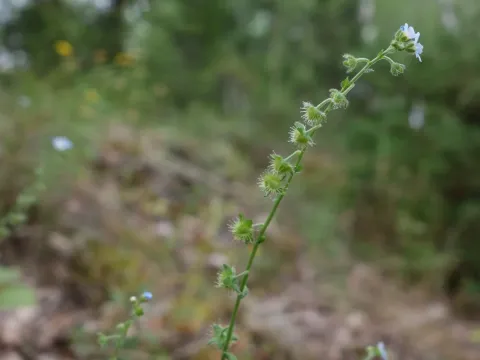
Lappula deflexa
Lappula deflexa
Lappula deflexa, commonly known as nodding stickseed, is an annual herbaceous plant belonging to the Boraginaceae family. While not a conventional crop, it is a significant species in ecological and agricultural monitoring due to its status as a competitive weed.
What the section contains
Lappula deflexa
The plant thrives in temperate climates and is commonly found in disturbed soils, roadsides, and field margins. It exhibits a preference for well-drained loamy or sandy soils with moderate fertility levels.
Ecologically, Lappula deflexa is highly adaptable to varying light conditions, although it performs best in full sun. It demonstrates a strong capacity for rapid establishment in early spring when soil moisture is sufficient.
The plant's root system is adapted to exploit soil nutrients efficiently, allowing it to compete with nearby crops for space and resources. Proper soil management is essential to prevent it from outcompeting young seedlings.
Regarding distribution, the species uses its hook-bearing nutlets to attach to passing animals or machinery, facilitating long-distance dispersal across diverse agricultural landscapes.
Agricultural threats associated with this species involve its role as a potential host for viral and fungal pathogens. These pathogens can transfer to related vegetable crops, posing a risk to yield quality.
Insect pests such as aphids and leaf beetles often colonize Lappula deflexa. If left uncontrolled, these populations can migrate to cultivated areas, necessitating increased pesticide intervention.
Mechanical control is the primary method of management. Shallow cultivation and hoeing before the plant reaches the flowering stage are highly effective in curbing the spread of this invasive weed.
Chemical control strategies involve the use of selective herbicides applied during the rosette growth phase. Monitoring programs should target field borders and non-crop areas to minimize the soil seed bank.
Effective management also requires careful sanitation of agricultural equipment to prevent the mechanical transfer of seeds between different fields, ensuring long-term containment of the population.