
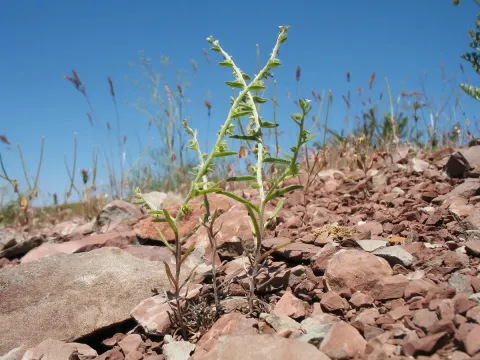
Lappula sessiliflora
Lappula sessiliflora
Lappula sessiliflora is an annual herbaceous plant belonging to the Boraginaceae family. It is typically found in arid and semi-arid regions, showcasing significant adaptation to harsh, open environments.
What the section contains
Lappula sessiliflora
The plant exhibits a preference for well-drained soils, often thriving in sandy, rocky, or gravelly substrates. Its root system is developed to seek moisture in deep soil layers during prolonged droughts.
Environmental conditions require high levels of solar radiation and arid air. It is not suitable for cultivation in humid or shady environments as it lacks the necessary biological mechanisms to compete for light.
In agricultural practice, it is recognized as a weed due to its ability to colonize fallow land and field borders. Its seeds possess hooked prickles that assist in rapid dissemination across vast areas.
Biological features include an early germination period, allowing the plant to reach maturity before the onset of the hottest summer months. It is an opportunistic species that quickly fills vacant niches.
Disease pressure on Lappula sessiliflora is primarily linked to fungal pathogens that thrive in fluctuating moisture conditions. Powdery mildew remains the most common threat to its foliage.
Pest interactions involve various leaf-chewing insects and aphids that may utilize the plant as a secondary host during the peak growing season, potentially spreading pathogens to crops.
Root system vulnerability is high when exposed to waterlogging. In compacted agricultural soils, the species struggles, making it susceptible to various root rot pathogens.
Intense weed management strategies are necessary to prevent the plant from dominating fields. Chemical control is often utilized due to the high reproductive capacity of the species.
Ecological competition with perennial grasses often limits its expansion. Effective management requires constant monitoring and integrated control measures to ensure that it does not displace cultivated crops.