
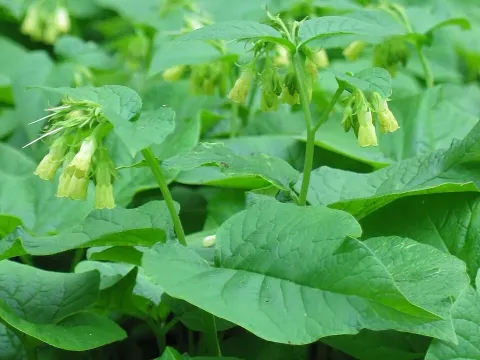
Island comfrey
Symphytum insulare
Island comfrey (Symphytum insulare) is a perennial herbaceous plant belonging to the Boraginaceae family. It is recognized as a high-yielding forage crop, appreciated for its deep root system and rapid vegetative regeneration capabilities.
What the section contains
Island comfrey
The plant originates from island environments characterized by stable, humid climates, which has contributed to its robust adaptive qualities. It is capable of growing in diverse ecological niches, provided the soil moisture is sufficient for constant metabolism.
Optimal growing conditions involve fertile, well-drained soils that are rich in organic matter. While it adapts to various soil textures, deep loam soils that allow for extensive root penetration are ideal for maximizing biomass production.
Climate requirements for this species are centered on temperate conditions with high annual rainfall. It demonstrates excellent winter hardiness, allowing it to survive frost while entering dormancy to resume vigorous growth in the early spring.
Agronomic management focuses on its role as a nutrient-dense fodder source. Comfrey is often harvested multiple times per season, serving as an excellent supplement for livestock due to its significant protein and mineral concentration.
Powdery mildew is a primary concern for island comfrey crops, especially during seasons with high humidity or poor field ventilation. Preventive measures include maintaining appropriate plant spacing to encourage airflow and reduce fungal spread.
Pests such as leaf beetles and certain larvae species can damage foliage, potentially reducing the nutritional yield of the crop. Early monitoring during the budding phase is essential to identify infestations before they become widespread.
Root rot represents a significant threat in poorly drained soils where water stagnation occurs. Ensuring proper soil preparation and drainage systems before planting is the most effective way to protect the longevity of the perennial crop.
Competition from aggressive weeds during the establishment phase can significantly impede the development of young comfrey plants. Mechanical cultivation and mulching are standard practices to suppress weed growth without chemicals.
Maintaining crop health relies on balanced nutrient management and strategic harvesting. Avoiding over-harvesting at the end of the season ensures that the roots store enough carbohydrates for winter survival and spring regrowth.