
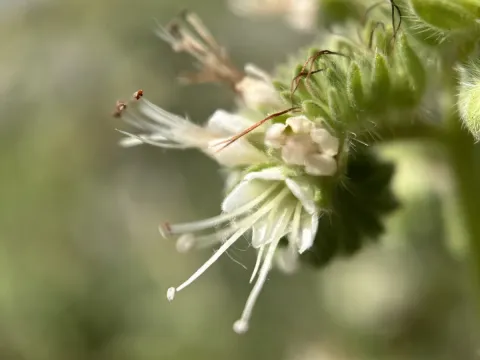
Imbricate phacelia
Phacelia imbricata
Phacelia imbricata, commonly known as imbricate phacelia, belongs to the Boraginaceae family. It is a hardy herbaceous perennial native to North America, known for its adaptability to various conditions.
What the section contains
Imbricate phacelia
Seeding is typically performed in early spring as soon as the soil is workable, ensuring that the plant establishes before the onset of summer heat.
A sowing rate of approximately 10 kg per hectare is recommended for optimal plant density, ensuring efficient coverage for weed suppression.
Seeds should be covered with a thin layer of soil, no deeper than 2 cm, to ensure adequate contact and moisture retention during germination.
It can be successfully sown in both prepared seedbeds and as a companion crop, depending on the specific agricultural goals of the operation.
This species thrives in well-drained soils and demonstrates a remarkable ability to persist in rocky or nutrient-poor substrates, which is typical for its natural habitat.
It exhibits high drought tolerance once established, making it a valuable option for dry-land farming where irrigation is unavailable or limited.
The plant requires full sun exposure to maintain its characteristic compact habit and to reach peak nectar production for pollinators.
Soil pH levels ranging from slightly acidic to neutral are generally preferred, though the plant shows significant plasticity in different environments.
Regular maintenance involves minimal soil disturbance, as the plant is efficient at forming deep roots that improve soil structure and water infiltration.
Imbricate phacelia is relatively resistant to major agricultural pathogens compared to other high-maintenance crops.
In humid or poorly aerated conditions, there is a minor risk of fungal issues such as grey mould or root rot, which are primarily related to excessive moisture.
Insect pests such as aphids or flea beetles may occasionally infest young seedlings, though damage is usually minor and rarely warrants chemical intervention.
Integrated pest management strategies are advised, prioritizing biological control and habitat management to protect local pollinator populations.
Monitoring for signs of stress or nutrient deficiencies is key to preventing the development of vulnerabilities that might attract secondary pests.
As a nectar-rich plant, the main agricultural interest lies in supporting pollinator health and biodiversity during the bloom phase.
When grown for green manure, the plants should be mown or incorporated into the soil at the early flowering stage to maximize nutrient recycling.
Seed harvesting requires careful timing, as the seeds mature unevenly and are prone to shattering if left on the stalk for too long.
Harvesting is often done using a combine harvester at the stage of yellow-brown maturity to capture as much seed as possible before dispersal.
The resulting crop residue is valuable for soil enrichment, acting as a source of organic matter that fosters beneficial soil microbial activity.