
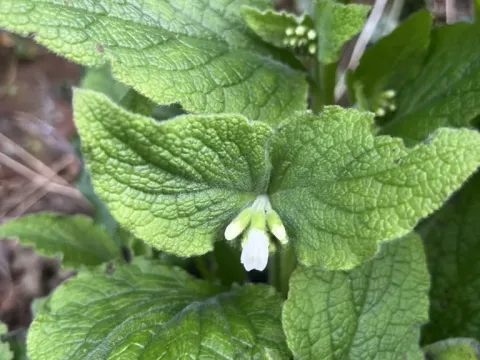
Eastern comfrey
Symphytum orientale
Eastern comfrey is a perennial herb belonging to the Boraginaceae family, widely recognized for its agricultural value. Propagation is typically achieved through root cuttings, which ensures uniformity and faster establishment compared to seed-based methods, which often have low germination rates.
What the section contains
Eastern comfrey
The ideal time for planting is early spring, as soon as the soil is workable, or in the autumn, provided the plants have enough time to establish their root systems before the onset of winter frosts. Root sections should be planted at a depth of 8 to 12 centimeters to ensure adequate soil coverage.
For commercial production, a spacing of 60 to 70 centimeters between rows is recommended. This setup facilitates mechanical weeding and ensures that the plants have sufficient space for development, which is crucial for achieving high biomass yields during the first few years of growth.
The species is known for its longevity and robustness, capable of productive growth on the same site for over 15 years. Once established, its fast early-spring growth allows it to outcompete most weeds, reducing the need for constant maintenance.
Preparation of the seedbed should involve deep tilling and the incorporation of organic matter. This helps improve the soil structure and provides the necessary nutrients for the plant's intense vegetative growth phase during the first season.
Eastern comfrey is well-adapted to various climates, showing significant cold tolerance and winter hardiness. It thrives in well-lit areas but can also grow effectively in partial shade, making it a versatile plant for integration into orchard or agroforestry systems.
The plant prefers deep, fertile, and well-drained soils with a neutral to slightly acidic pH. While it is quite adaptable, it performs poorly in waterlogged conditions or on heavy clay soils where aeration is limited, which can lead to root rot.
Moisture is essential for high yields, although the plant's deep taproot system allows it to withstand short periods of summer drought better than many other shallow-rooted pasture crops. Regular rainfall or supplemental irrigation significantly increases its productivity.
Nutrient requirements, particularly for potassium, are high because the plant extracts minerals from deep within the soil profile. Periodic application of balanced fertilizers or organic compost helps maintain high yield levels over the long lifespan of the plantation.
To ensure optimal health, avoid sites with high groundwater levels. Good drainage is the most critical factor in successful Eastern comfrey cultivation, as it prevents the degradation of the plant's sensitive crown and root system.
The yield potential of Eastern comfrey is impressive, often producing three to four harvests per growing season. Under intensive cultivation with proper fertilization, it can generate massive quantities of high-quality green biomass.
Average yields range significantly based on soil fertility and management practices, but in favorable conditions, the plant can reach several hundred quintals per hectare annually. Productivity typically peaks around the third year after planting.
The green mass is highly prized as a nutritious fodder for livestock, rich in protein, calcium, and trace elements. It is frequently used in animal feed rations either fresh, as silage, or as a component in dried hay mixtures when processed correctly.
Beyond fodder, Eastern comfrey serves as an excellent bio-fertilizer. Due to its ability to concentrate minerals, its foliage is highly valued as a liquid fertilizer or mulch, helping to restore soil health and fertility in horticultural settings.
Management after harvest is vital; the plant should be allowed a rest period to recover its reserves. Consistent monitoring and proper timing of cuttings are necessary to maintain a steady and high production flow throughout the growing months.
Eastern comfrey is relatively resistant to major agricultural pests and diseases. However, in conditions with poor air circulation or excessive humidity, the plants may be susceptible to powdery mildew, which manifests as a white coating on the leaves.
Some leaf-eating insects may appear during certain seasons, but their impact is usually limited and rarely requires chemical intervention. Encouraging natural predators and maintaining healthy plant vigor are the most effective management strategies.
Root rot is the most serious threat, occurring primarily when the plants are grown in poorly drained soils. Preventing soil water stagnation is the primary method for ensuring the long-term survival and health of the crop.
Slugs can be problematic for young, newly planted crops in damp springs, as they prefer the tender, succulent foliage. Simple barriers or clean cultivation practices are usually sufficient to control these pests during the early establishment phase.
Overall, the plant's ability to develop a dense canopy helps it suppress weed growth and tolerate many common environmental stresses. Routine scouting of the plantation is recommended to detect any unusual health issues early on.
Harvesting should ideally begin at the onset of flowering. At this stage, the nutrient concentration within the plant, especially protein, is at its peak, providing the best quality feed for livestock and the most effective nutrient profile for fertilizers.
Cutting should be performed 5 to 7 centimeters above the soil line to stimulate rapid regrowth. Using sharp mechanical mowers ensures a clean cut, which helps the plants recover quickly and produces higher quality regrowth for subsequent harvests.
The cut mass is quite succulent, which makes natural drying in the field a slower process than with hay. Proper handling, such as frequent tedding or turning, is required to prevent mold and ensure the crop dries sufficiently for storage or processing.
When used as mulch or compost, the biomass can be harvested whenever needed. However, harvesting before the stalks become too woody ensures faster decomposition and better nutrient availability for the soil when applied as a top dressing.
Efficient management of the harvest cycle, including the use of modern machinery for cutting and raking, allows for a high return on investment and a sustainable supply of organic material for both farm animals and garden fertility programs.