
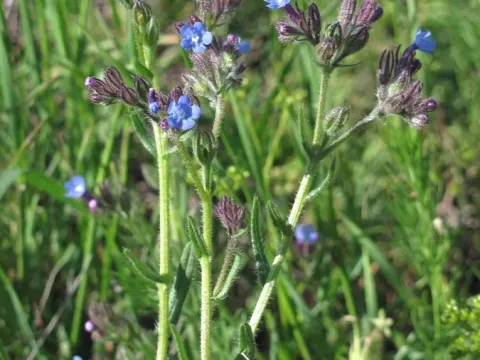
Anchusa thessala
Anchusa thessala
Anchusa thessala is a member of the Boraginaceae family, often recognized for its distinct blue flowers and rough, hairy foliage characteristic of the genus.
What the section contains
Anchusa thessala
For propagation, seeds can be sown directly into the soil in early spring after the risk of frost has passed to encourage strong initial root development.
Autumn sowing is also a viable option in milder climates, allowing the seeds to undergo natural stratification for more vigorous spring emergence.
Seedlings started indoors require well-draining soil mixes and a bright, cool location to prevent them from becoming leggy before they are ready for planting.
Spacing is essential for this species, as mature plants tend to spread, requiring about 30–40 cm between individual specimens for optimal growth.
This species thrives in sunny locations, as it requires high light intensity to maintain its compact shape and ensure prolific flower production.
Well-drained, porous soil is critical; the plant is highly sensitive to waterlogged conditions, which can lead to rapid crown rot during the winter months.
While relatively drought-tolerant once established, it benefits from moderate watering during the heat of mid-summer to prolong its blooming period.
Soil pH should be neutral to slightly alkaline for optimal nutrient uptake, making it a suitable choice for various garden soil types.
Minimal fertilizing is usually sufficient, as excessive nitrogen can lead to lush vegetative growth at the expense of flower output.
Root and crown rot are the primary threats, typically occurring in heavy, damp soils where drainage is insufficient for the plant's needs.
Fungal issues such as powdery mildew may develop during periods of high humidity and poor air circulation around the base of the plant.
Slugs and snails often target tender young leaves and seedlings, necessitating vigilance or physical barriers early in the growing season.
Aphids can occasionally colonize the flower buds, causing deformation and reducing the overall aesthetic quality of the blooms.
Effective management includes keeping the surrounding area clear of debris and ensuring that the foliage stays relatively dry during irrigation.