
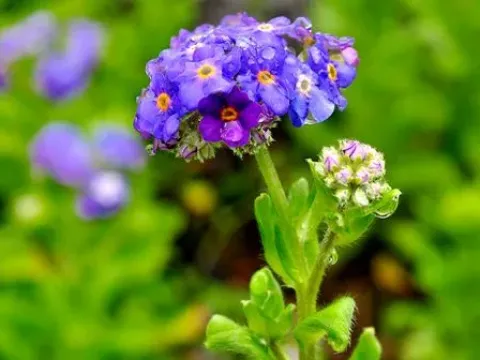
Azorean forget-me-not
Myosotis azorica
The sowing of Azorean forget-me-not is typically scheduled for early spring, allowing the plants to establish themselves before the onset of summer heat.
What the section contains
Azorean forget-me-not
For optimal results, seeds should be sown in a sterile, well-draining seed starting mix and kept at a steady temperature between 18 and 20 degrees Celsius.
Seedlings are ready for transplanting when they have developed two or three sets of true leaves, ensuring they are handled gently to protect delicate roots.
Direct outdoor sowing is possible in regions with mild climates, provided that the soil surface is kept consistently moist throughout the germination phase.
Spacing is a critical factor for success; keeping plants about 20-25 centimeters apart helps maintain airflow and prevents the development of fungal pathogens.
Myosotis azorica, belonging to the Boraginaceae family, is native to the Azores, which dictates its need for a humid environment and moderate temperatures.
This species performs best in partial shade, as intense direct sunlight can desiccate the soil and lead to poor flower production and foliage burn.
Soil requirements include high organic matter content, excellent drainage, and a slightly acidic to neutral pH for robust nutrient uptake and growth.
Consistent irrigation is vital, as the plant does not tolerate drought; however, the soil must never become waterlogged to avoid root suffocation.
Fertilization should be applied sparingly, focusing on balanced nutrients during the vegetative growth phase to support both foliage and floral development.
Powdery mildew is a primary concern for this crop, particularly during periods of high humidity and when the plants are grown in overcrowded conditions.
Root rot is a major threat in soils with poor drainage, often caused by overwatering or compacted soil layers that trap excess moisture around the roots.
Pests such as aphids and spider mites can infest the plants, particularly when they are stressed by environmental factors like extreme heat or lack of water.
Integrated pest management, including regular monitoring and the use of insecticidal soaps, is recommended to manage populations without harming beneficial insects.
Maintaining clean garden beds and removing infected plant tissue immediately helps limit the spread of diseases throughout the entire crop population.