
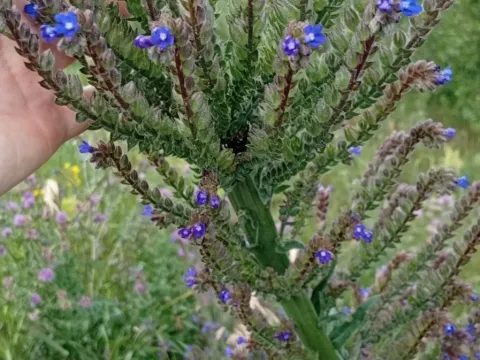
Anchusa procera
Anchusa procera
Anchusa procera, a member of the Boraginaceae family, is a robust perennial herb known for its striking floral display. Propagation is primarily carried out via seeds sown in early spring as soon as the frost risk has passed.
What the section contains
Anchusa procera
When starting indoors, seeds should be sown in mid-March in well-draining potting mix, kept at a steady temperature of around 20 degrees Celsius for optimal germination.
Seedlings require sufficient light and air circulation to prevent damping-off, which is a common issue for young borage family plants in humid environments.
Transplanting into the permanent garden bed should be done with care to avoid root disturbance, ensuring each plant has a spacing of 50 centimeters.
Natural reseeding can occur, so if space is limited, gardeners should deadhead spent flowers to control the spread of the plants in the following season.
This species thrives in full sun exposure, which is critical for maintaining its strong, upright habit and producing vibrant, long-lasting flowers.
The soil should be fertile and light, with a neutral to slightly alkaline pH; avoid heavy clay soils that retain excessive moisture during the rainy season.
While the plant is quite drought-tolerant once established, supplemental irrigation during prolonged dry spells will help prolong the blooming period.
Good drainage is the most vital requirement, as waterlogged conditions often lead to rapid deterioration of the fleshy root system characteristic of this genus.
Applying a layer of organic mulch around the base of the plant can help regulate soil temperature and suppress weeds throughout the active growing cycle.
Powdery mildew is the most frequent disease encountered, particularly in areas with poor airflow and high humidity during the mid-summer months.
Aphids and spider mites are common pests that target the foliage, causing stunted growth and yellowing of the leaves if left untreated.
Root rot, often caused by over-irrigation, can be devastating, requiring immediate intervention such as improving soil drainage or removing infected sections.
Integrated pest management, including the use of neem oil or insecticidal soaps, is often sufficient to control minor pest infestations.
Maintaining a clean growing space and removing plant debris at the end of the season reduces the overwintering capacity of common pathogens.