
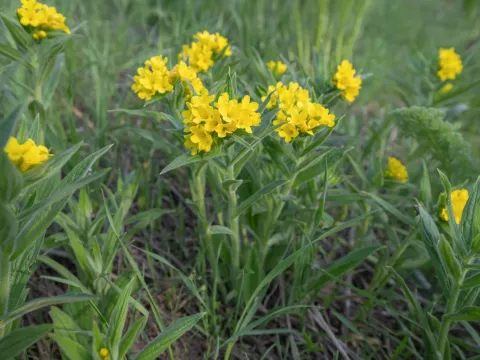
Arnebia
Arnebia
Arnebia is typically sown in open fields during the spring once the soil temperature consistently reaches 10–12 degrees Celsius.
What the section contains
 Arnebia benthamii
Arnebia benthamii
Arnebia benthamii
 Arnebia decumbens
Arnebia decumbens
Arnebia decumbens
 Arnebia densiflora
Arnebia densiflora
Arnebia densiflora
 Arnebia euchroma
Arnebia euchroma
Arnebia euchroma
 Arnebia guttata
Arnebia guttata
Arnebia guttata
 Arnebia hispidissima
Arnebia hispidissima
Arnebia hispidissima
 Arnebia linearifolia
Arnebia linearifolia
Arnebia linearifolia
 Arnebia pulchra
Arnebia pulchra
Arnebia pulchra
 Arnebia tinctoria
Arnebia tinctoria
Arnebia tinctoria
Arnebia
It is crucial to time the planting to avoid potential late frosts, as young seedlings are quite sensitive to extreme temperature drops.
To improve establishment and speed up production, growers often practice pre-germination of seeds to ensure more uniform emergence.
Spacing between rows should be at least 45–60 centimeters to provide each plant with adequate space for root and foliage development.
Seeds should be planted at a shallow depth of 1–2 centimeters, as small seeds require consistent contact with moist soil for successful germination.
Arnebia belongs to the Boraginaceae family and is a characteristic xerophytic plant adapted to arid environmental conditions.
The crop thrives in well-drained, light sandy or sandy-loam soils with a neutral or slightly alkaline pH level.
It is a sun-loving species, meaning commercial plantations must be located in open areas that receive full sunlight without any shading.
Arnebia has moderate moisture requirements; waterlogging or stagnant water can cause root rot and compromise the entire crop's health.
Optimal growth conditions include hot, dry summers and controlled moisture levels during the peak vegetative stage of development.
Yield levels for Arnebia depend significantly on seasonal climate variations, the quality of planting stock, and rigorous adherence to agronomic practices.
In commercial settings, the primary economic interest lies in the roots, which accumulate high levels of bioactive compounds like shikonin.
Average dry matter yields per hectare fluctuate based on soil fertility, plant density, and the maturity stage of the harvested crop.
Intensive care, including precise micronutrient fertilization, can significantly increase the concentration of secondary metabolites in the plant roots.
Harvesting usually occurs in the second or third year, when the root system has reached sufficient size and active compound density.
Fungal diseases are the primary threat to Arnebia, particularly when soil moisture levels are too high or air humidity is excessive.
Root rot remains the most common issue, which can devastate entire fields if irrigation management is poorly controlled.
Pests such as wireworms and aphids can cause localized damage to younger plants, leading to stunted growth during the early stages.
To mitigate disease risks, strict crop rotation schedules must be followed, avoiding the same plot for Arnebia for at least 4–5 years.
Preventative fungicide applications are limited to the early development phase to ensure the final herbal product meets safety standards.
Harvesting is typically conducted using mechanical root diggers, which allow for the gentle extraction of roots from the soil profile.
The ideal harvest timing is late autumn, after the end of the vegetative cycle, ensuring maximum accumulation of bioactive substances in the roots.
Following extraction, roots must be thoroughly cleaned of soil and washed in running water to prevent spoilage during the drying process.
Drying is performed in specialized industrial dryers at temperatures not exceeding 40–45 degrees Celsius to preserve the chemical integrity.
Final storage must be in a cool, dark, and well-ventilated environment to prevent moisture damage and degradation from light exposure.