
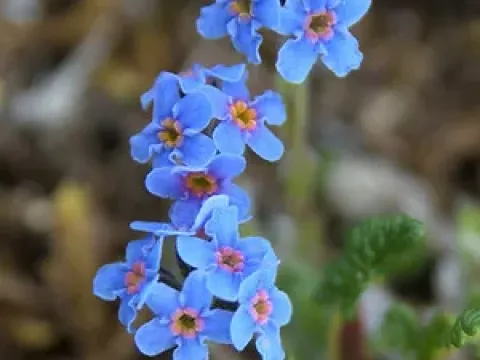
Asian forget-me-not
Myosotis asiatica
The Asian forget-me-not (Myosotis asiatica) is a herbaceous perennial belonging to the Boraginaceae family. It is naturally adapted to harsh environments, found extensively in Arctic and sub-Arctic regions, as well as high-altitude zones of Siberia and the Far East.
What the section contains
Asian forget-me-not
The plant thrives in cool climates and requires soil that is rich in organic matter and maintains constant moisture. Unlike many garden varieties, Myosotis asiatica is exceptionally cold-hardy, capable of surviving severe winters without special protection.
When selecting a planting site, it is crucial to ensure good drainage. While the species loves moisture, stagnant water is detrimental to its roots and can cause rot, especially during periods of high humidity and low solar activity.
Growth requirements include moderate sun exposure. While the plant can tolerate partial shade, bright light is essential for developing the deep, vibrant blue color of the blossoms and maintaining a compact habit of the plant.
The botanical structure consists of a basal rosette of leaves and slender stems that rise to display dense, curled racemes of blue flowers with characteristic yellow centers. This species is often utilized in rock gardens and naturalistic landscapes.
Powdery mildew represents the most frequent fungal disease for Myosotis asiatica, often triggered by dense planting and stagnant air. Proper spacing is essential to ensure adequate airflow and reduce moisture accumulation on leaves.
Gray mold (Botrytis) is another significant threat, particularly in damp and cool weather. It typically targets the stems and flowers, resulting in dark, water-soaked spots and rapid decay of the plant tissue if left unchecked.
Aphids are common insect pests that infest the plant during the early growth stages. By feeding on the plant sap, they weaken the stems and stunt floral development, requiring prompt intervention with soaps or mild insecticides.
Slugs and snails can also damage the foliage, especially in moist garden environments. Keeping the area surrounding the plants clean and removing debris is an effective way to minimize their presence and prevent damage.
General integrated pest management practices should be employed to protect the crop. This involves keeping the soil surface well-drained and inspecting plants regularly during the spring to catch potential infestations early.